
Shanghai K11 Art Mall: The Ultimate Visitor Guide
Discover Shanghai K11 Art Mall — top art exhibits, luxury shops, dining, and insider tips to plan the perfect visit. Updated 2025 guide.
Posted by
 Vangelis
Related reading
The Ultimate Shanghai Language Guide: Master Mandarin Communication from Zero to Confident
Your complete Shanghai language guide covering essential Mandarin phrases, learning apps, cultural tips, and a practical roadmap to communicate confidently in China's biggest city.
The Ultimate Guide to Shanghai's LGBTQ Scene: 17 Welcoming Spaces, Apps, Tips & Hidden Gems
Discover Shanghai's vibrant LGBTQ scene with our complete guide to gay-friendly bars, clubs, cafes, dating apps, neighborhoods & local tips for an amazing visit.
Shanghai Budget Guide: Travel China's Megacity for Less
Plan your Shanghai trip without breaking the bank. Discover daily costs, cheap eats, free attractions, and budget accommodation tips for 2024.
Shanghai Nanjing West Road Shopping: Complete Guide
Discover the best malls, luxury stores, dining, and insider tips for shopping on Shanghai's Nanjing West Road. Your complete 2024 guide.
Chinese New Year in Shanghai: Real Stories from Travelers Who Cracked the Code
Discover how real travelers transformed their Shanghai Spring Festival experience from tourist traps to authentic celebrations through practical case studies and insider strategies.
Weather in Shanghai: Real Stories from People Who Learned the Hard Way
Comprehensive guide to Shanghai's weather patterns through real case studies, helping travelers and expats understand and prepare for the city's unique climate challenges.
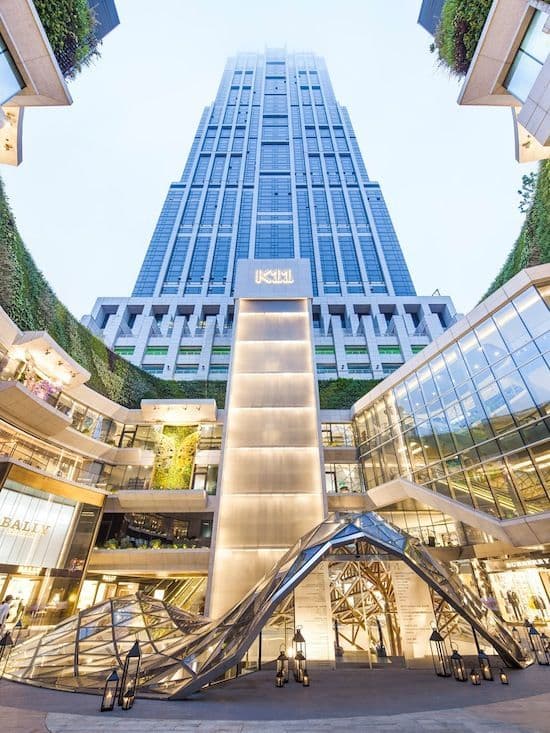
🎨 Where Art and Shopping Collide Underground
Imagine stepping off a metro train in the heart of Shanghai and walking into a building where Monet paintings share space with luxury boutiques, underground art installations light up your path, and the smell of freshly brewed specialty coffee drifts past a life-size contemporary sculpture. That is the everyday reality of the Shanghai K11 Art Mall — and it is unlike any shopping destination you have ever visited.
K11 holds a special place in retail history. It was the first mall in Asia to fully blend museum-quality art with consumer culture, creating what founder Adrian Cheng called the "art mall" concept. Since opening its Shanghai location in 2014, it has drawn millions of visitors — not just shoppers, but art lovers, foodies, travelers, and anyone curious about what comes next in urban culture.
This guide covers everything you need for a perfect visit: how to plan your trip, which art exhibitions to catch, where to shop, what to eat, and the insider tools that make navigating K11 effortless. Whether this is your first time or your fifth, there is always something new to discover here.
🏛️ What Is Shanghai K11 Art Mall?
The Vision Behind the "Art Mall" Concept
K11 was born from a bold idea: that shopping and art do not have to compete with each other. Adrian Cheng, the Hong Kong entrepreneur and heir to Chow Tai Fook Jewellery Group, launched the concept with a simple belief — that people crave cultural experiences alongside commercial ones. He did not want to build another glass tower full of designer stores. He wanted to build something that would make people feel something.
The result is a space where contemporary artworks are not tucked into a corner gallery or a separate floor. They are woven into the architecture itself. You find art on corridor walls, embedded in floor tiles, hanging from atrium ceilings, and installed in the basement levels that most malls would dedicate entirely to parking or storage.
The K11 timeline starts in 2013, when the first K11 Art Mall opened in Hong Kong. Shanghai followed in 2014, and it quickly became the flagship model for the concept. Since then, K11 has expanded across China and evolved its brand into tiers — including K11 Musea in Hong Kong, which serves as the premium luxury expression of the same idea. Across all locations, the core philosophy stays the same: retail and culture belong together.
Where Is K11 Located in Shanghai?
The Shanghai K11 Art Mall sits at 300 Huaihai Middle Road, Huangpu District — one of the most culturally rich and well-connected addresses in the city.
Getting there is straightforward. Take Metro Line 1 or Metro Line 10 to either Xintiandi Station or South Huangpu Road Station. Both exits put you within a short walk of the entrance. If you are coming from The Bund, it is roughly a 20-minute taxi ride or a scenic 30-minute walk through the French Concession. Xintiandi, one of Shanghai's most famous heritage districts, is practically next door — making it easy to combine both into a single day out.
📍 K11 At a Glance
- Address: 300 Huaihai Middle Road, Huangpu District
- Metro: Line 1 or Line 10 — Xintiandi Station or South Huangpu Road Station
- Hours: 10:00 AM – 10:00 PM daily
- Free Floors: L1 ground retail + parts of B1–B3 art installations
- Nearest Landmark: Xintiandi (2-minute walk)
📅 How to Plan Your Visit to Shanghai K11 Art Mall
Step 1 — Check Current Exhibitions Before You Go
K11's exhibition calendar rotates regularly, typically featuring two to four major shows per year alongside a steady program of smaller curated displays. The difference between visiting during a blockbuster exhibition and visiting without checking ahead can be significant — both in terms of what you experience and how busy the space is.
The best way to stay updated is through the official K11 app, available on both iOS and Android. It shows current and upcoming exhibitions, allows you to purchase timed tickets, and tracks your loyalty points. If you prefer to skip the app, the K11 WeChat mini-program is what most local visitors use — open WeChat, search for K11, and you will find the mini-program for mall navigation, event bookings, and restaurant reservations.
Ticket pricing varies depending on the exhibition. Ground-level retail areas and parts of the basement art installations are free to access. Ticketed exhibition spaces typically range from ¥50 to ¥150 RMB per person, with major blockbuster shows sometimes priced higher. For popular exhibitions, booking timed entry tickets three to seven days in advance is strongly recommended — walk-up tickets often sell out on weekends.
Step 2 — Choose the Right Day and Time
Timing your visit makes a real difference to your experience. The quietest window is weekday mornings between 10am and noon. Crowds pick up significantly after lunch, and weekends — especially Sunday afternoons — can feel overwhelming near the most popular art installations.
K11 runs a seasonal exhibition calendar tied to the K11 Art Foundation's spring and autumn cycles. Spring shows often open in March or April, while autumn programming typically launches in September or October. During Chinese New Year, K11 stages large-scale installation art themed around the Lunar calendar. If you are visiting during Golden Week (October 1–7), expect K11 to be extremely busy — book tickets well in advance and aim for early morning entry.
Step 3 — Download the Right Tools and Apps
A few digital tools will make your visit much smoother, especially if you are an international visitor unfamiliar with how apps work in mainland China:
- K11 Official App: Best for exhibition tickets, loyalty point tracking, and browsing the floor directory before you arrive.
- WeChat Mini-Program: The go-to tool for locals. Search "K11" inside WeChat to access in-mall navigation, event registration, and dining reservations.
- Dianping (大众点评): Think of this as China's Yelp. Use it to check real-time queue lengths at K11's restaurants and read recent reviews with photos.
- Amap (Gaode Maps): Google Maps does not work reliably in mainland China. Download Amap before your trip for accurate navigation to K11's entrance from nearby metro stations.
- Currency Converter App: Most transactions in K11 are cashless via Alipay or WeChat Pay, but international credit cards are accepted at most stores and restaurants.
Step 4 — Set a Budget Framework
K11 caters to a wide range of budgets. Here is a practical breakdown so you can plan realistically:
| Category | Budget Range | Notes |
|---|---|---|
| Free Access | ¥0 | Ground floor retail, partial B1–B3 art zones |
| Ticketed Exhibitions | ¥80–¥120/person | Blockbuster shows may be higher |
| Casual Dining | ¥80–¥150/person | Cafés, dessert bars, quick bites |
| Mid-Range Dining | ¥200–¥400/person | Korean BBQ, ramen, modern Shanghainese |
| Fine Dining | ¥600+/person | Omakase, European tasting menus |
| Local Designer Shopping | ¥300–¥3,000/item | K11 Art Village boutiques |
A comfortable full-day visit covering one exhibition, lunch, and light shopping typically runs ¥500–¥800 per person for mid-range spending.
🖼️ The Art Experience — Exhibitions, Installations & Collections
The Permanent Art Collection
One of the most distinctive things about the K11 art exhibitions Shanghai experience is that the art does not wait for you in a separate wing. It meets you wherever you are. The permanent collection includes more than 100 curated contemporary artworks integrated directly into the building's architecture.
You might notice a large-scale abstract painting embedded into a corridor wall between two boutiques, or a sculptural installation rising from a sunken atrium that doubles as a rest area. Floor tiles in certain sections carry printed imagery from Chinese contemporary artists. Ceiling elements in the basement levels are designed as art pieces in themselves.
The K11 Art Foundation, established in 2010 — before the first mall even opened — funds and curates much of this collection with a particular focus on emerging Chinese contemporary artists. The Foundation's mission is to give these artists a platform that reaches everyday consumers, not just art world insiders. That philosophy is visible throughout the building.
Rotating Exhibitions and Ticketed Shows
The Shanghai K11 Art Mall has hosted some genuinely landmark exhibitions since its 2014 opening. The most famous was the Claude Monet retrospective in 2014, which drew over 300,000 visitors in just six weeks — a record at the time for any exhibition held in a commercial retail space in China. That show helped establish K11 not just as a mall with some art on the walls, but as a legitimate cultural venue.
Since then, K11 has hosted digital art shows by teamLab, a Salvador Dalí retrospective, and multiple group shows featuring both international and Chinese contemporary artists. The pattern tends to follow a clear structure: one or two "blockbuster" anchor shows per year that drive broad public interest, supported by smaller boutique exhibitions that appeal to art-world audiences.
To find out what is coming before everyone else does, follow the K11 WeChat official account and search for K11 on Little Red Book (小红书 / Xiaohongshu). The Little Red Book community is especially active around K11 exhibitions — user posts there often surface news of upcoming shows days or even weeks before official announcements.
🏆 Notable Past Exhibitions at Shanghai K11
- Claude Monet (2014): 300,000+ visitors in 6 weeks — the show that put K11 on the cultural map
- teamLab Digital Art: Immersive digital installations filling entire basement galleries
- Salvador Dalí Retrospective: Major surrealism survey drawing regional art travelers
- K11 Art Foundation Annual Shows: Chinese contemporary group exhibitions each spring and autumn
K11 Art Village and Community Programs
Tucked within the mall's lower floors, the K11 Art Village is a dedicated space for independent artists and designers. Think of it as a creative incubator that also happens to be open for retail. Artists in the Village have access to studio and retail space inside the mall, which means you can sometimes meet the maker of the object you are looking at.
Beyond the retail side, the Art Village hosts regular workshops, artist talks, and live installation events. These range from beginner-friendly craft workshops to in-depth conversations with major figures in Chinese contemporary art. Most events require pre-registration through the K11 app or WeChat mini-program, and spaces fill up fast for anything featuring well-known artists.
🎥 Walking Tour of Shanghai K11 Art Mall — All Floors Explored in 4K (B3 to L6)
🛍️ Shopping at K11 — Brands, Boutiques & What to Buy
Luxury and International Brands
K11's retail mix reflects its dual identity as both a Shanghai luxury shopping mall and a cultural institution. The anchor tenants include a carefully selected range of European fashion houses and Japanese lifestyle brands, chosen not just for their commercial appeal but for their alignment with K11's cultural aesthetic.
What makes shopping here slightly different from a standard luxury mall is that some K11 boutiques carry exclusive colorways, limited-edition pieces, or collaboration items not available at the same brand's other Shanghai locations. This happens because K11 actively negotiates with retail partners for exclusivity as part of its cultural positioning. It is worth asking in-store whether anything is K11-exclusive before you assume you can find it cheaper or more conveniently elsewhere.
Local and Independent Designer Brands
This is where the Shanghai art retail experience that K11 promises really comes to life. The K11 Art Village retail section spotlights independent Chinese designers and sustainable fashion labels that you will not find in any other mall in the city.
Prices here are mid-to-premium, with most fashion items sitting in the ¥300–¥3,000 range. What you are paying for is originality — these are small-run pieces from designers who have been selected by K11's curatorial team rather than by a standard retail leasing process. Look for co-branded hang tags or packaging that feature the K11 Art Village logo alongside the designer's own branding — these indicate K11-exclusive collaborations with the highest collectibility value among K11 regulars.
K11 Select — The Curated Concept Store
If you only have time to visit one retail space in the entire mall, make it K11 Select. This concept store pulls together art books, design objects, limited-edition merchandise, and artist collaborations into a single, highly edited shopping experience. It sits somewhere between a museum gift shop and a high-end design gallery — and it gets the balance right.
🎁 K11 Select Gift Guide by Budget
- Under ¥200: Art postcards, artist-designed notebooks, ceramics, and small design objects
- Under ¥500: Art books, silk scarves, limited-edition prints, and collaborative homeware pieces
- Under ¥1,000: Signed or numbered art editions, premium design objects, and exclusive brand collaborations
Many K11 Select products are also available online through the K11 official website and their Tmall flagship store — useful for international visitors who want to ship purchases home.
🍱 Dining at Shanghai K11 Art Mall
Top Restaurants by Category
Dining at K11 is genuinely one of its strongest features, and the K11 Xintiandi restaurants reputation is well-earned. The food and beverage offering spans a wide range without feeling random — each restaurant feels like it belongs in the same curated environment as the art around it.
Fine dining options include Japanese omakase counters where chefs prepare seasonal multi-course menus right in front of you, Cantonese contemporary restaurants that reimagine classic dim sum traditions with modern technique, and European tasting menus built around seasonal imported ingredients. For these, reservations are essential — sometimes weeks in advance for the most popular kitchens.
Mid-range dining is where most visitors end up spending their meal times, and the quality is high. Korean BBQ spots with premium cuts, specialist ramen restaurants with broths developed since early morning, and modern Shanghainese cuisine restaurants that feel like a local's interpretation of grandmother's recipes — these are the kinds of places that become regulars for people who work nearby.
Casual eating and cafés fill the gaps throughout the day. Specialty coffee concepts have strong presences here — several roasters with cult followings among Shanghai's coffee community have outposts in K11. Dessert bars, Taiwanese bubble tea concepts, and Japanese convenience-style food counters mean you can eat well without sitting down or spending much.
How to Avoid Long Waits
The most popular casual dining spots at K11 — particularly the ramen restaurants and Korean BBQ spots — can have wait times of 40 minutes to over an hour on weekend afternoons. Use Dianping to check real-time queue data before you commit to a spot. Many restaurants now allow you to add your name to a virtual queue through Dianping or their own WeChat mini-programs, which means you can browse the mall or visit an exhibition while you wait for your table.
| Dining Tier | Price/Person | Reservation Needed? | Best Time to Visit |
|---|---|---|---|
| Fine Dining | ¥600+ | Yes — book weeks ahead | Any time with reservation |
| Mid-Range | ¥200–¥400 | Recommended | Weekday lunch (noon–1pm) |
| Casual / Café | ¥80–¥150 | Not required | 10am–11:30am or after 2pm |
🎥 K11 Art Mall Shanghai Seasonal Guide — Spring, Summer, Autumn & Winter Highlights
💡 Insider Tips for the Best K11 Experience
After speaking with regular K11 visitors and locals who treat this space as a weekly haunt, these are the strategies that genuinely improve your visit:
- Start from the bottom, work up ⬆️ — Begin at B3 when the underground art garden is quietest and light levels are consistent. Work your way up through exhibition floors before heading to retail. This is the opposite of most visitors' instinct, which means you will have the best spaces largely to yourself.
- Ask staff about hidden pieces 🔍 — Front-of-house staff and security guards often know about permanent art pieces that visitors walk past without noticing. A simple "Is there anything interesting nearby?" opens surprising conversations.
- Use the loyalty program from day one 🏅 — K11's loyalty points system accumulates across purchases at retail, dining, and ticketed events. Points unlock priority access to new exhibitions and invitations to private openings.
- Combine with Xintiandi for a full day 🗺️ — K11 and Xintiandi are a 2-minute walk apart. A natural itinerary is: K11 art and shopping in the morning, lunch inside K11, then an afternoon walk through Xintiandi's shikumen lanes and lane houses.
- Follow Little Red Book for real-time crowd intel 📱 — Search "K11" on Xiaohongshu on the morning of your visit. Local users post real-time updates about queue lengths, new installations, and crowd levels. This is faster and more accurate than any official channel.
- Buy exhibition tickets the night before 🎟️ — The K11 app allows you to select a timed entry window. Buying the night before your visit secures your slot without the three-to-seven day advance booking stress associated with peak season shows.
❓ Frequently Asked Questions
Is Shanghai K11 Art Mall free to enter?
The ground floor retail areas and portions of the basement art installations are free to access — no ticket required. Ticketed exhibition galleries typically charge ¥50–¥150 per person depending on the show. Check the K11 app for current pricing before you arrive.
How many hours do I need at K11?
A focused visit covering one major exhibition, a quick browse of K11 Select, and a casual lunch typically takes three to four hours. If you want to explore every floor, attend a workshop, and have a full sit-down dinner, plan for a full day — five to seven hours.
Is Shanghai K11 suitable for children?
Yes, especially during special programming periods. The underground art garden and immersive digital exhibitions tend to engage children well. The K11 Art Village sometimes hosts family-friendly workshops. That said, the overall atmosphere skews toward adult cultural visitors — it is not a theme park or play space.
Can I pay with a foreign credit card at K11?
Most retailers and restaurants within K11 accept international credit cards (Visa, Mastercard). However, having Alipay or WeChat Pay set up before you visit makes the experience smoother — some smaller Art Village retailers and casual food counters are cashless and mobile-payment only.
What is the difference between Shanghai K11 and K11 Musea in Hong Kong?
K11 Musea in Hong Kong is the flagship luxury expression of the K11 brand — larger, with a higher concentration of international luxury tenants and more high-profile touring exhibitions. Shanghai K11 is the original Art Mall format and has a stronger focus on Chinese contemporary art and local designer culture. Both are excellent, but they have distinct curatorial identities.
Is K11 Art Mall wheelchair accessible?
Yes. All floors are accessible via elevator, and the main corridors and exhibition spaces are wheelchair-friendly. The B3 underground art garden has some uneven surfaces in specific installation areas — staff at the B3 entrance can advise on accessible routes before you enter.
🎨 Your K11 Adventure Starts Here
The Shanghai K11 Art Mall is not a shopping mall that happens to have some art on the walls. It is a genuine cultural destination that also happens to have excellent retail and dining. That distinction matters — and it changes how you should approach your visit.
- ✅ Check exhibitions first: Use the K11 app or WeChat mini-program before you arrive to see what is showing and book timed tickets
- ✅ Go on a weekday morning: The 10am–noon window gives you the quietest, most rewarding experience
- ✅ Start at B3: Work upward from the underground art garden for the best flow through the building
- ✅ Visit K11 Select: The curated concept store offers the most distinctive souvenirs and gifts you will find in Shanghai
- ✅ Download Dianping: Check restaurant queues in real time and avoid the worst waiting periods
- ✅ Combine with Xintiandi: Two of Shanghai's most rewarding cultural and dining destinations in one walkable area
- ✅ Follow Little Red Book: Real-time crowd and exhibition updates from locals who visit weekly
Whether you have a single afternoon or an entire day to spare, the Shanghai K11 Art Mall rewards curiosity. Go slowly, read the labels next to the art, ask questions in the Art Village, and let the building surprise you. That is exactly what Adrian Cheng built it to do.
Have you visited Shanghai K11 Art Mall? Which exhibition or floor impressed you most? Share your experience — fellow visitors and first-timers alike benefit from every honest account of what makes this place special. 🖼️