
Taikang Road & Tianzifang Shanghai: Complete Guide to the City's Most Charming Arts District
Discover Taikang Road and Tianzifang Shanghai - hidden alleyways packed with art galleries, cafes, and boutiques. Complete visitor guide with insider tips.
Posted by
 Vangelis
Related reading
Ultimate Guide to Shanghai Neighborhoods: Where to Live, Work & Play
Looking for the perfect Shanghai neighborhood to call home? This comprehensive guide covers everything from the trendy French Concession to family-friendly Gubei, with rent prices, metro access, and insider tips for each area.
Your Complete Guide to Visiting the Global Harbor Area in Shanghai
Want to explore one of Shanghai's biggest shopping and entertainment destinations? This step-by-step guide shows you exactly how to get there, what to see, and how to make the most of your visit without getting lost.
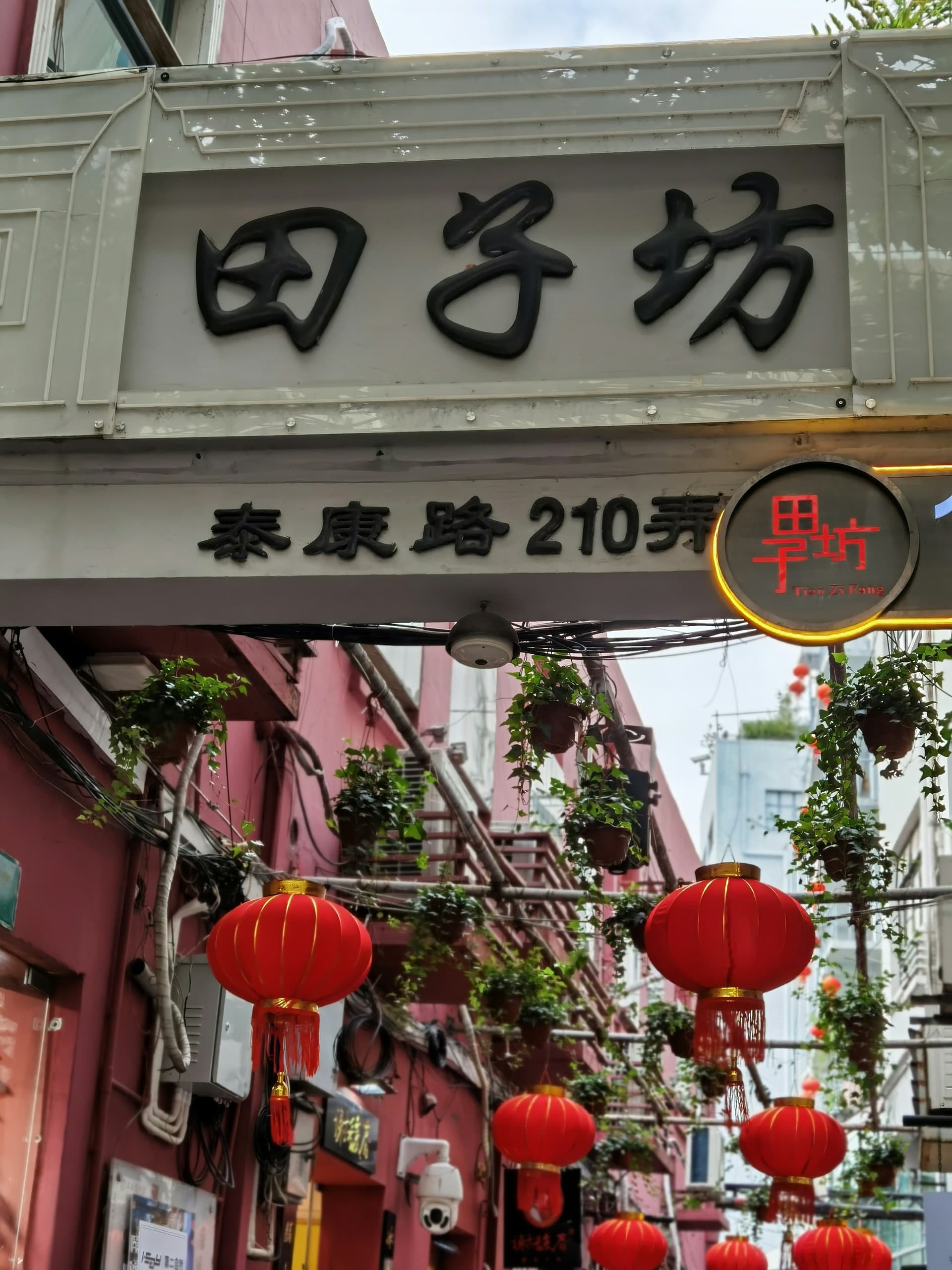
Looking for an authentic slice of old Shanghai mixed with creative energy? Taikang Road and Tianzifang offer something rare in this fast-changing metropolis—a place where historic alleyways meet contemporary art, where traditional shikumen houses host trendy cafes, and where you can still feel the soul of the neighborhood beneath the tourist bustle.
Unlike the polished luxury of Xintiandi or the towering skyscrapers of Pudong, Tianzifang keeps things real. Here, laundry still hangs from second-story windows above art galleries. Local grandmothers chat on stools beside boutique entrances. And winding lanes reveal surprise after surprise—a hidden courtyard cafe, a contemporary art studio, a vintage shop tucked behind a red door.
Ready to explore Shanghai's most charming creative district? Let's dive deep into what makes Taikang Road Area Shanghai a must-visit destination. 🎨
What is Tianzifang? Understanding Shanghai's Creative Heart
Tianzifang (田子坊, Tiánzǐfāng) is a pedestrian arts and crafts neighborhood located along Taikang Road in the French Concession area of Shanghai. Think of it as an organic arts district that evolved naturally rather than being designed by city planners.
The name "Tianzifang" comes from a famous ancient Chinese painter. Local artist Chen Yifei chose this name to reflect the area's artistic ambitions. While some people use "Taikang Road" and "Tianzifang" interchangeably, technically Taikang Road is the main street, while Tianzifang refers to the network of lanes (longtang) branching off it—particularly Lanes 210, 248, and 274.
What makes this place special? 🤔
Unlike planned tourist zones, Tianzifang maintains its authentic residential character. Real people still live here. You'll see actual Shanghai life happening alongside the cafes and galleries. Old residents navigate past tourists carrying shopping bags. The smell of home cooking mixes with fresh coffee. This layering of old and new, authentic and commercial, creates an atmosphere you won't find anywhere else in Shanghai.
Located in Huangpu District, Tianzifang sits in the heart of the former French Concession—an area that once housed French colonial administration. Today, it represents a successful model of urban regeneration, where preservation meets progress without completely erasing the past.
From Factory to Fashion: The Transformation Story
Every corner of Tianzifang whispers stories of transformation. Walk these lanes and you're literally stepping through Shanghai's modern history.
The Beginning: A Working-Class Neighborhood
Originally, this area was a typical Shanghai residential neighborhood built in the 1930s. Working-class families lived in crowded shikumen lane houses. Multiple families often shared single buildings. Conditions were basic—communal kitchens, shared bathrooms, narrow living spaces. Life centered around the longtang (alleyways), where neighbors knew everyone's business.
After 1949, the neighborhood became even more crowded as the government assigned multiple families to houses originally built for one. The area had little money, few amenities, and attracted zero tourist attention. It was just... home. 🏠
The Turning Point: Artist Chen Yifei's Vision
The transformation began in 1998 when renowned Chinese artist Chen Yifei rented a warehouse space here for his studio. Chen saw something others missed—the bones of something beautiful beneath the decay. The architecture had character. The location was central. And most importantly, rent was cheap.
Word spread through Shanghai's art community. If Chen Yifei could set up here, maybe others could too. Artists and designers began trickling in, attracted by affordable rent and generous space. They converted old lane houses and workshops into studios and galleries. The creative energy was palpable.
By the early 2000s, Tianzifang had become an underground art scene. Locals started opening small shops and cafes to serve the growing artist community. Photographers discovered the area's visual appeal—those narrow lanes, the play of light through laundry lines, the mix of old and new. Shanghai's expat community caught on. Word spread online.
Going Mainstream (For Better or Worse)
By 2010, Tianzifang had exploded in popularity. Tourist buses added it to itineraries. Rents skyrocketed. Many original artists were priced out—the very people who'd created the area's appeal. The neighborhood commercialized rapidly.
Today, Tianzifang walks a fine line. Yes, it's more commercial than before. Yes, you'll find plenty of tourist-oriented shops. But remarkably, it has retained more authenticity than similar districts. Some original artists remain. Real residents still live here. And if you know where to look, you can still find that creative spark that started everything. ✨
The Architecture: Shikumen Style Explained
You can't understand Tianzifang without understanding shikumen (石库门), literally "stone warehouse gate." This uniquely Shanghainese architectural style defines the neighborhood's character.
East Meets West in Brick and Stone
Shikumen houses emerged in the late 1800s as Shanghai opened to Western influence. Chinese builders created a hybrid style—taking the layout of traditional Chinese courtyard houses and fusing it with Western building techniques and materials.
The result? Something distinctly Shanghai:
Shikumen Architecture Features
Walk through a shikumen gate and you step into a different world. The thick stone frame creates a portal effect—from the chaos of modern Shanghai into an intimate neighborhood scale. These gates weren't just decorative; they provided security, created clear boundaries between public and private space, and helped communities feel distinct. 🚪
Why These Buildings Matter
Shikumen houses once made up 60% of Shanghai's housing. They defined how ordinary Shanghainese lived through the Republican era, Japanese occupation, and Communist period. But rapid development destroyed most of them. Today, only a fraction remain.
Tianzifang represents one of the best-preserved shikumen neighborhoods. Unlike museum recreations, these are working buildings, still serving their purpose (though now as cafes and shops rather than pure residences). You can touch the stone, climb the narrow stairs, duck under low doorways. It's living architectural history.
The best-preserved examples cluster around Lane 210's northern section and the quieter portions of Lane 248. Look up as you walk—many upper floors retain original wooden window frames and carved details that disappeared from the modernized ground floors.
Navigating Tianzifang: Lane-by-Lane Breakdown
Tianzifang can feel like a maze. That's part of its charm! But knowing the major lanes helps you navigate with purpose. Think of these three main arteries as having distinct personalities. 🗺️
Tianzifang Interactive Lane Map
Lane 210: The Main Attraction
Entrance: Main Taikang Road entrance
Vibe: Bustling, tourist-friendly, polished
Best for: First-time visitors, shopping, photo ops
This is where most people start, and for good reason. Lane 210 offers the most concentrated shopping and dining. It's wider than other lanes, making it less claustrophobic when crowded.
Don't miss:
- The iconic entrance shot (get there early for photos without crowds)
- Deke Erh Art Center—one of the original artist studios
- Multiple jewelry and accessory boutiques with unique pieces
- Rooftop bars and cafes with views over the lane houses
Photography tip: The archway entrance photographs beautifully in morning light (around 8-9 AM). Come early before tour groups arrive for clean shots without human traffic.
Lane 248: The Hidden Gem
Entrance: Smaller entrance mid-way down Taikang Road
Vibe: Quieter, more residential, authentic
Best for: Escaping crowds, local atmosphere, hidden cafes
Many visitors miss Lane 248 entirely, which makes it perfect for those seeking authenticity. You'll still find galleries and cafes, but mixed with actual residential life. Grandmothers still sun themselves in doorways here. The pace slows down.
Don't miss:
- Small family-run tea shops with no English signs
- Tiny courtyard cafes with just a few tables
- Glimpses of residential life through open doors
- More affordable dining options
Insider tip: This lane is perfect for afternoon exploration when Lane 210 feels overwhelming. The lack of signage means you might miss the best spots—look for open doors and peek inside courtyards.
Lane 274: Tourist Central
Entrance: Southern Taikang Road entrance
Vibe: Very commercial, crowded, foreigner-friendly
Best for: Souvenir shopping, international dining, people-watching
Let's be honest—Lane 274 is the most commercialized section. If you want authentic Shanghai character, this isn't it. But if you need souvenirs, want familiar international food, or enjoy bustling market energy, you'll fit right in.
What you'll find:
- Souvenir shops (magnets, postcards, "I ❤️ Shanghai" items)
- International restaurants (Italian, Japanese, Western cafes)
- Ice cream shops and bubble tea chains
- English-speaking staff everywhere
Strategy: Hit this lane last, after you've explored the more authentic sections. It's useful for picking up gifts or grabbing familiar food, but don't let it be your only impression of Tianzifang.
Top Art Galleries & Creative Spaces
Despite commercialization, Tianzifang still maintains legitimate artistic credibility. Several galleries showcase serious work, and you might even meet working artists in their studios. 🎨
Established Galleries Worth Your Time
Deke Erh Art Center remains one of the originals. This gallery helped put Tianzifang on the art map and continues showcasing contemporary Chinese artists. The space itself—a converted shikumen building—demonstrates how historical structures can host modern art without losing character. Exhibitions rotate regularly, so each visit offers something new.
Tianzifang Arts & Crafts functions as more of a collective than a single gallery. Multiple small artists share the space, offering paintings, ceramics, calligraphy, and mixed media work. Quality varies, but the variety makes browsing interesting. Prices range from affordable prints to serious collector pieces.
The community of working studios scattered throughout the lanes offers the most authentic artistic experience. Many artists keep open studios, welcoming visitors who show genuine interest. Look for signs saying "Artist Studio" or simply follow the sound of work happening—pottery wheels, painting in progress, jewelry being crafted.
How to Engage Meaningfully
Visiting galleries in Tianzifang differs from Western museum experiences. Here's how to make the most of it:
Do:
- Take your time looking at work before asking prices
- Ask artists about their process and inspiration
- Be respectful of photography rules (many allow it, some don't)
- Consider buying directly from artists rather than shops
Don't:
- Rush through while barely glancing at art
- Aggressively bargain on original artwork
- Interrupt artists actively working without permission
- Assume all "galleries" showcase original art (some sell mass-produced copies)
Best times for gallery hopping: Weekday afternoons (2-5 PM) when spaces are open but not crowded. Artists are more likely to chat when they're not overwhelmed with visitors.
The Food Scene: From Street Snacks to Fine Dining
Food in Tianzifang reflects its hybrid identity—traditional Shanghai flavors meet international influences, tourist-friendly restaurants coexist with local hole-in-the-wall joints. The diversity means everyone finds something, but quality varies dramatically. 🍜☕
Cafes Worth Your Time
Shanghai's coffee culture thrives in Tianzifang. Many cafes here pre-date the city's current specialty coffee boom, giving them a relaxed, established vibe.
Kommune pioneered the Tianzifang cafe scene and remains a favorite. This Australian-influenced spot serves solid coffee, healthy breakfast/brunch options, and provides a welcoming atmosphere for lingering. The courtyard seating offers a peaceful escape from lane traffic. Expect to pay ¥40-60 for coffee drinks, ¥60-120 for food.
Bell Bar blends cafe culture with craft cocktails. The laid-back space works equally well for afternoon coffee as evening drinks. Local expats and creative professionals frequent it, creating an international but not touristy vibe. The rooftop seating is a hidden treasure.
For authentic local experience: Skip the obvious cafes and look for unmarked tea houses in Lane 248. You won't find English menus or fancy latte art, but you'll experience how locals actually relax—playing cards, chatting loudly, drinking tea from glass jars. Most welcome curious visitors.
Tianzifang Budget Guide 💰
💰 Budget (¥10-30)
- • Street snacks & jian bing
- • Fresh fruit cups
- • Bakery items
- • Basic bubble tea
💰💰 Casual (¥50-100)
- • Cafe meals
- • Quick lunch spots
- • Specialty coffee
- • Light dining
💰💰💰 Mid-Range (¥100-200)
- • Sit-down restaurants
- • International cuisine
- • Full meals with drinks
- • Quality dining
💰💰💰💰 Upscale (¥200+)
- • Fine dining
- • Rooftop bars
- • Premium cocktails
- • Special occasions
Restaurants by Cuisine
Shanghai Traditional: Surprisingly, authentic Shanghai food is harder to find here than you'd expect. Most restaurants cater to tourists or serve fusion variations. For real deal Shanghai cuisine, look for smaller, less polished spots on the edges of the area. Xiao Yang Sheng Jian (if you find a location nearby) serves phenomenal sheng jian bao (pan-fried soup dumplings). Otherwise, consider venturing outside Tianzifang for authentic local food.
International Options: Tianzifang excels at international cuisine. Italian restaurants cluster throughout, ranging from tourist-trap pasta to legitimate trattorias. Japanese, Thai, Korean, and Western restaurants offer mostly good quality, though prices run 30-50% higher than equivalent places elsewhere in Shanghai.
Fusion & Contemporary: This is where Tianzifang shines. Restaurants blending Chinese techniques with international flavors create interesting dining experiences. These spots attract both tourists and locals, indicating legitimate appeal beyond just convenience.
Street Food and Snacks
Look beyond sit-down restaurants for some of the best eating experiences:
- Jian bing (Chinese crepes) from street vendors at the Taikang Road entrance (¥8-15)
- Fresh fruit cups during summer months (¥15-25)
- Bubble tea shops offering every variation imaginable (¥20-35)
- Small bakeries with fresh dan ta (egg tarts) and other pastries (¥8-20)
Shopping Guide: Boutiques, Souvenirs & Local Crafts
Shopping in Tianzifang falls into two categories: tourist souvenirs and legitimate boutique finds. Smart shoppers mix both. 🛍️
Unique Boutiques and What They Sell
Several boutiques offer genuinely unique items you won't find in regular Shanghai malls:
Textile and clothing shops feature independent Chinese designers creating contemporary fashion with traditional influences. Look for qipao (cheongsam) reinterpreted for modern wear—these make meaningful souvenirs that you'll actually use. Prices range from ¥300-2,000 depending on complexity and materials.
Jewelry boutiques showcase pearl designs (Shanghai's traditional specialty), silver work, and contemporary pieces. Quality varies dramatically—examine craftsmanship closely before buying. Better shops welcome questions and educate buyers about their techniques.
Home goods and ceramics shops offer everything from mass-produced teapots to handcrafted studio pottery. The challenge is distinguishing authentic artisan work from factory production. Signs of handmade quality include slight irregularities, artist signatures, and significantly higher prices.
Best Places for Authentic Souvenirs
Want souvenirs that don't scream "tourist trap"? Here's what actually works:
Good souvenir choices:
- Hand-painted silk scarves from actual artist studios
- Vintage Shanghai advertising posters (reproduction, but stylish)
- Traditional tea sets (if you have luggage space)
- Small calligraphy pieces or paintings
- Locally designed postcards and prints
Skip these tourist traps:
- Mass-produced "Chinese" items made elsewhere in Asia
- Cheap jade or pearl jewelry (likely fake)
- Poorly made fabric items that won't survive washing
- Generic "I ❤️ Shanghai" merchandise available everywhere
Price Expectations and Bargaining Tips
Bargaining culture exists in Tianzifang but with limits. Here's the realistic breakdown:
Fixed prices: Established galleries, branded shops, cafes, and restaurants don't bargain. Don't embarrass yourself by trying.
Negotiable: Independent boutiques, souvenir shops, and market-style vendors expect some negotiation. But this isn't a traditional market—aggressive bargaining is considered rude.
Smart bargaining approach:
- Browse without pressure—never show extreme interest immediately
- Ask prices on multiple items, not just your target
- Make a reasonable counter-offer (10-20% below asking)
- Be prepared to walk away politely
- If they won't budge and the price seems fair, just buy it
Reality check: Most prices in Tianzifang are already set for the market. You might get 10-15% off with polite negotiation, but don't expect 50% reductions. The days of extreme bargaining here are long gone.
Best Times to Visit & What to Expect
Timing dramatically impacts your Tianzifang experience. Choose wisely! ⏰
Seasonal Considerations
Spring (March-May): Ideal visiting season. Mild temperatures (15-25°C) make walking pleasant. Flowers bloom in courtyard spaces. Crowds are moderate. Pack layers—mornings can be cool, afternoons warm.
Summer (June-August): Hot, humid, and crowded. Temperatures hit 35°C+ with oppressive humidity. The narrow lanes trap heat. Air-conditioned cafes become essential rest stops. Tip: Visit in early morning or evening to avoid peak heat.
Autumn (September-November): Another prime season. Comfortable temperatures, lower humidity, beautiful light for photography. Chinese National Holiday (early October) brings massive crowds—avoid that week if possible.
Winter (December-February): Cold (0-10°C) but manageable. Fewer tourists mean easier navigation and better deals. Indoor heated cafes feel especially cozy. The bare trees actually improve sightlines for photography. Bundle up and you'll have a more intimate experience.
Weekday vs Weekend Crowds
This makes perhaps the biggest difference:
Weekdays: Significantly quieter, especially Tuesday-Thursday. Shopkeepers are more relaxed and willing to chat. You can actually take photos without dozens of people in the background. Artists in studios have time for conversations. The neighborhood breathes.
Weekends: Absolutely packed, especially Saturday afternoons. Chinese tour groups, international tourists, and locals all converge. Navigation becomes challenging. Lines form at popular cafes. Prices sometimes inch higher. If you must visit weekends, go early (before 10 AM) or late (after 6 PM).
Time of Day Atmospheres
Morning (8-11 AM): Quiet, authentic, perfect for photography. Locals do their morning routines—tai chi in tiny courtyards, market shopping, tea drinking. Many shops haven't opened yet, but the trade-off is experiencing real neighborhood life. Cafes start serving breakfast.
Afternoon (12-5 PM): Peak tourist hours. All shops are open, lanes fill with visitors, energy is high but can feel overwhelming. Best for shopping and hitting major attractions. Expect crowds at popular restaurants.
Evening (6-10 PM): The area transforms. Daytime tourists depart, replaced by people coming for dinner and nightlife. Lighting creates a different mood—strings of lights, glowing windows, intimate atmosphere. Bars and restaurants hit their stride. This might be the most magical time to visit. 🌙
Photography golden hours: Early morning (7-9 AM) and late afternoon (4-6 PM) provide the best natural light. The narrow lanes create dramatic shadow play during these times.
Practical Visitor Information
Let's cover the nuts and bolts you need for a smooth visit. 📍
How to Get There
Metro (Easiest): Take Line 9 to Dapuqiao Station (打浦桥站), Exit 1. Walk west on Jianguo Middle Road for about 5 minutes, then turn left on Ruijin Er Road. The main Taikang Road entrance will be on your right. Total time from exit: 8-10 minutes walking.
Alternative metro: Line 13 also stops at Madang Road Station, slightly farther but still walkable (15 minutes).
Taxi/Didi: Tell the driver "Taikang Lu, Tianzifang" (泰康路,田子坊). Most drivers know it. The nearest landmark is Dapuqiao Park. Expect ¥30-80 depending on your starting point in Shanghai.
Walking from nearby areas: If you're exploring the French Concession, Tianzifang makes a logical stop. It's about 20 minutes walk from Xintiandi, 25 minutes from Fuxing Park.
Opening Hours and Days
The area itself is always accessible—it's a public neighborhood, not a gated attraction. However, individual businesses keep their own hours:
- Most shops: 10 AM - 9 PM daily
- Cafes: 8 AM - 10 PM (some stay open later)
- Restaurants: 11 AM - 10 PM (dinner spots may open later)
- Galleries: 10 AM - 6 PM (some close Mondays)
No official closing days, though individual businesses may close for Chinese New Year or other holidays.
Entry Fees
The area is completely free to enter and explore. No tickets, no admission fees, no charges for walking around. Individual venues (galleries, museums, cafes, shops) charge for their specific services, but simply wandering the lanes costs nothing.
This accessibility makes Tianzifang democratic—anyone can experience it regardless of budget.
Accessibility Considerations
Honesty time: Tianzifang is not wheelchair accessible. The historic nature that makes it charming also creates challenges:
Obstacles:
- Narrow lanes with frequent steps
- Uneven stone and brick paving
- No elevators in most buildings
- Crowded pathways when busy
- Traditional high door thresholds
For visitors with mobility challenges: The main lanes (especially Lane 210) are mostly flat and navigable with care. But reaching upper-floor venues, exploring smaller side lanes, and navigating crowds all present difficulties. Many cafes have ground-floor seating options.
Family-Friendly Aspects
Yes, Tianzifang works for families, with some caveats:
Good for families:
- Safe environment with pedestrian-only lanes
- Many cafes welcome children
- Ice cream and snack shops everywhere
- Interesting visual stimulation for kids
- Restrooms available in cafes and restaurants
Challenges:
- Strollers are difficult in narrow, crowded lanes
- Limited dedicated kid-friendly activities
- Can get boring for young children quickly
- Few playgrounds or open spaces
Family strategy: Plan for 1-2 hours maximum with young kids. Focus on a cafe with good treats, one or two kid-friendly shops (maybe a toy or craft shop), and snack opportunities. Don't try to see everything.
Safety and Scam Awareness
Tianzifang is very safe. Violent crime is virtually nonexistent. However, minor tourist-targeted issues exist:
Watch for:
- Overcharging at restaurants without clear prices—always check menus first
- Tea house scams where friendly locals invite tourists for tea, then present enormous bills (rare in Tianzifang proper, more common in approaches nearby)
- Pickpocketing in crowds (uncommon but not impossible)
- Aggressive salespeople in souvenir shops—learn to say "不要" (bù yào - "don't want") firmly
Common sense tips:
- Keep valuables secure in front pockets or crossbody bags
- Check restaurant prices before ordering
- Don't follow strangers to other locations
- Use official taxis/Didi rather than unlicensed cars
- Keep your phone charged and accessible for maps
Tianzifang vs Other Shanghai Districts
Where does Tianzifang fit in Shanghai's tourist landscape? Let's compare. 🏙️
Tianzifang vs Xintiandi
These two often get compared since both are renovated shikumen neighborhoods in the French Concession:
Xintiandi: Polished, upscale, completely reconstructed. High-end brands, expensive restaurants, luxury positioning. It's beautiful but feels more like an outdoor mall than a neighborhood. Perfect for people-watching over expensive coffee.
Tianzifang: Grittier, more authentic, actually organic. Mix of price points, real residents still present, maintained architectural authenticity. Feels more like a real place than a designed attraction.
Bottom line: If you have to choose one, Tianzifang offers more authentic Shanghai character. If you have time for both, they represent interesting contrasts—see Xintiandi to understand modern Shanghai luxury, see Tianzifang to understand creative Shanghai soul.
How It Differs from The Bund
The Bund shows Shanghai's grand historical face—colonial architecture, river views, iconic skyline. It's impressive, photogenic, and very tourist-focused.
Tianzifang shows Shanghai's neighborhood-level history—how ordinary people lived, how communities functioned, how creative energy transforms spaces.
They complement each other. The Bund gives you the postcard. Tianzifang gives you the story.
Compared to Jing'an Arts Scene
Jing'an District has emerged as Shanghai's contemporary art hub with major galleries like M50 and various independent spaces.
For serious art collectors and contemporary art enthusiasts: Jing'an offers more substance.
For casual visitors wanting art mixed with atmosphere: Tianzifang is more accessible and enjoyable.
Think of Jing'an as Shanghai's Chelsea, and Tianzifang as its more touristy but charming Greenwich Village equivalent.
Which Type of Traveler Suits Tianzifang?
You'll love Tianzifang if you:
- Appreciate architectural history and urban regeneration
- Enjoy browsing boutiques and discovering unique items
- Like cafe culture and leisurely afternoons
- Want Instagram-worthy streets without traveling far
- Prefer human-scale neighborhoods to grand monuments
- Appreciate the mix of commercial and authentic
You might be disappointed if you:
- Expect completely untouched traditional Shanghai
- Hate crowds and tourist areas entirely
- Only want major landmark attractions
- Need cutting-edge contemporary art
- Can't tolerate any commercial development
Hidden Gems & Insider Tips
Now for the good stuff—what most visitors never discover. 🤫
Secret Photo Spots
Beyond the obvious entrance shots, try these:
The rooftop laundry shots: Upper floors of Lane 248 still have residents hanging laundry. Shoot from ground level looking up for authentic Shanghai life framed by architecture. Early morning provides best light.
Courtyard glimpses through open doors: Many ground-floor venues leave doors open. The frame-within-frame composition of doorway → courtyard → beyond creates depth. Ask permission if photographing private spaces.
Reflections in cafe windows: Evening shots when interior lights glow against darkening exteriors create moody, layered images.
The quietest corner: The northeast section of Lane 210, farthest from entrances, gets missed by most visitors. You'll find tiny residential sections unchanged for decades.
Local Behaviors to Respect
Remember, people actually live here:
- Don't photograph residents without permission (a smile and gesture asking helps)
- Keep voices moderate—sound carries in narrow lanes
- Don't block residential doorways while taking photos
- Respect "private" signs and closed doors
- If residents hang laundry across lanes, duck under it rather than moving it
Cultural note: Some elderly residents feel ambivalent about the tourist transformation. Being respectful and considerate helps. A smile and basic "ni hao" (hello) goes far.
Best Kept Secret Shops/Cafes
The unmarked tea house in Lane 248: No sign in English, looks like someone's living room, serves traditional Chinese tea exactly how locals drink it. Look for old men playing cards—that's your landmark.
Second-floor galleries: Most tourists never climb stairs. The best artwork often hides on upper floors where rent is slightly cheaper and serious collectors explore.
Early morning dumpling lady: Around 7:30-9 AM, a woman sells homemade dumplings from a cart near the Dapuqiao entrance. Locals line up. ¥10 gets you amazing breakfast.
How to Experience It Like a Local
Locals who come to Tianzifang (yes, some still do) have a different pattern:
- They visit on weekday afternoons, never weekends
- They head to specific cafes they know, not browsing randomly
- They buy practical items (good tea, specific crafts) not souvenirs
- They eat at the peripheral cheaper restaurants, not central tourist traps
- They come in the evening for drinks and meeting friends
Your local-like strategy:
- Visit Tuesday or Wednesday afternoon
- Pick one cafe and linger for 2+ hours with a book
- Talk to shopkeepers during quiet moments
- Explore the residential edges, not just commercial cores
- Return in the evening to see the different atmosphere
What to Skip (Tourist Traps)
Save your time and money:
- Skip: The restaurant with multilingual menus and pictures outside—food will be mediocre and overpriced.
- Skip: Souvenir shops with identical merchandise to every other shop—they buy from the same wholesalers.
- Skip: "Art galleries" selling mass-produced paintings with no artist signature—these are prints or factories works.
- Skip: Peak weekend afternoon hours if at all possible—the experience degrades significantly.
- Skip: Tour group restaurant recommendations—they receive commissions and quality suffers.
Sample Itineraries
Different time availabilities call for different approaches. ⏳
2-Hour Quick Visit
Perfect for people squeezing Tianzifang into a busy Shanghai day:
- 9:00 AM - Arrive at Dapuqiao Station, walk to main entrance
- 9:15 AM - Explore Lane 210, take photos at less crowded time
- 9:45 AM - Stop at a good cafe for coffee/breakfast (Kommune or similar)
- 10:30 AM - Browse 2-3 galleries or shops that catch your eye
- 10:50 AM - Final photos and departure
Keys to success: Early arrival beats crowds. Focus on main lane only. Choose one good cafe rather than rushing through multiple mediocre ones.
Half-Day Exploration
For people who want deeper experience without full day commitment:
- 10:00 AM - Arrive and start in Lane 248 (the quiet one)
- 10:30 AM - Explore Lane 210, taking time with galleries that interest you
- 11:30 AM - Browse boutiques for souvenirs or unique items
- 12:30 PM - Lunch at a restaurant that appeals to you (research in advance)
- 2:00 PM - Coffee and people-watching at a courtyard cafe
- 3:00 PM - Hit Lane 274 for any remaining souvenir needs
- 3:30 PM - Departure
Keys to success: Mix structured time (specific galleries, planned lunch) with unstructured browsing. Leave space for discovering unexpected corners.
Full Day with Nearby Attractions
For Tianzifang enthusiasts who want the complete area experience:
- 9:00 AM - Breakfast at a Tianzifang cafe
- 10:00 AM - Systematic exploration of all three main lanes
- 12:00 PM - Walk to nearby Dapuqiao neighborhood for local lunch
- 1:30 PM - Visit Fuxing Park (15 min walk) for a break from crowds
- 3:00 PM - Return to Tianzifang for afternoon tea/coffee
- 4:00 PM - Focused shopping time for items you spotted earlier
- 5:30 PM - Break/rest at accommodation if nearby
- 7:00 PM - Return for dinner at a restaurant you researched
- 8:30 PM - Evening stroll through illuminated lanes
- 9:30 PM - Departure
Keys to success: Building in a break prevents Tianzifang fatigue. Seeing it at different times reveals different characters.
Evening Visit for Atmosphere
A unique approach most tourists miss:
- 6:30 PM - Arrive as daytime tourists depart
- 7:00 PM - Dinner at a quality restaurant (book ahead if possible)
- 8:30 PM - Slow walk through illuminated lanes
- 9:00 PM - Drinks at a bar with character (Bell Bar or similar)
- 10:00 PM - Final stroll and photos of nighttime atmosphere
- 10:30 PM - Departure
Keys to success: Evening Tianzifang feels completely different—more relaxed, more romantic, more local. If you've already visited during day, an evening return reveals the neighborhood's other personality.
Nearby Attractions to Combine
Maximize your time in this area by combining Tianzifang with nearby attractions. 🗺️
Dapuqiao Neighborhood (immediate area, 5-minute walk) - The surrounding streets contain excellent local restaurants, traditional markets, and authentic Shanghai neighborhood life. This is where locals shop and eat. Exploring here provides context for understanding what Tianzifang used to be.
Fuxing Park (15-minute walk west) - This beautiful French Concession park offers green space, people-watching, morning tai chi, and a totally different pace. Locals come here to dance, sing, exercise, and socialize. It's free and provides wonderful people-watching. The contrast between the commercial Tianzifang and community-focused park enriches both experiences.
Xintiandi (20-minute walk northeast) - As discussed earlier, this upscale entertainment district makes an interesting comparison point. The architectural contrast between renovated-fancy (Xintiandi) and preserved-authentic (Tianzifang) teaches you a lot about urban development approaches.
Former French Concession Historic Streets (surrounding area) - The entire neighborhood surrounding Tianzifang merits exploration. Tree-lined streets, art deco apartment buildings, hidden cafes, and historical plaques tell Shanghai's Republican-era story. Simply wandering rewards you with discoveries.
Shiliupu Fabric Market (25-minute walk) - For bargain hunters and fashion DIY enthusiasts, this massive fabric market offers incredible variety at low prices. You can buy fabric and have clothes custom-made within days. It's a completely different vibe from Tianzifang but rounds out the shopping experience.
Combining Attractions Efficiently
Sample combined route: Morning: Start at Fuxing Park (9 AM) → Walk to Tianzifang (10 AM) → Lunch at Tianzifang (12:30 PM) → Afternoon Tianzifang exploration (2 PM) → Walk to Xintiandi for dinner (6 PM)
Time management tip: Don't try to cram everything in one day. Combining Tianzifang with 1-2 other attractions creates a pleasant day. Adding more means you'll rush everything and enjoy nothing.
Conclusion: Is Tianzifang Worth Your Time?
After all this detail, let's answer the core question: Should you visit Tianzifang?
Yes—if you understand what you're getting. Tianzifang isn't undiscovered Shanghai. It's not free from commercialization. You won't be the only tourist there. But it offers something genuinely valuable: a place where history, creativity, and urban life layer together in ways that feel more real than manufactured.
The shikumen architecture matters. The transformation story from working-class neighborhood to arts district teaches you about modern China's rapid change. The mix of authentic residents and commercial enterprises shows how preservation and development can coexist. And yes, it's genuinely pleasant to wander narrow lanes, duck into cafes, discover unexpected courtyard spaces, and feel temporarily transported from Shanghai's overwhelming scale down to human-level streets.
Final Tips for Your Best Experience:
- 🎯Visit on a weekday morning for the best balance of open shops and manageable crowds
- 🎯Allow 2-3 hours minimum—rushing defeats the purpose
- 🎯Pick one cafe and linger rather than speed-browsing multiple venues
- 🎯Explore beyond Lane 210 to find more authentic corners
- 🎯Lower your expectations slightly—it's good, not perfect
- 🎯Combine it with Fuxing Park or French Concession exploration for a fuller day
Tianzifang won't change your life. But it might just become your favorite memory of Shanghai—that charming afternoon wandering narrow lanes, discovering a hidden courtyard cafe, watching an artist paint in their studio, feeling like you'd found a small corner of the city that still had soul.
And really, isn't that exactly what travel should deliver? 🌟