
The Shanghai Treaty Port Era: A Complete Guide to Understanding China's Most Fascinating Historical Period
Discover the fascinating history of Shanghai's treaty port era. Learn about foreign concessions, daily life, architecture, and how this period shaped modern Shanghai. Includes interactive timeline, maps, and expert resources.
Posted by
 Vangelis
Related reading
Shanghai Foreign Concessions: The Untold Story of China's 'Foreign City'
Discover how foreign powers controlled parts of Shanghai from 1845-1943. Explore the history, daily life, and lasting legacy of the Shanghai foreign concessions that shaped modern China.
Shanghai's Literary Revolution: How Writers Transformed a City Into the Paris of the East
Discover how Shanghai intellectuals and writers like Lu Xun and Eileen Chang transformed Chinese literature through revolutionary approaches, creating a lasting literary legacy that bridges East and West.
Twenties Era Shanghai: The Ultimate Guide to the Paris of the East
Discover the magic of twenties era Shanghai — the glamorous nightlife, stunning fashion, jazz clubs, and the fascinating blend of East meets West that made it the Paris of the East.
Introduction
Have you ever wondered how Shanghai became one of the world's most exciting cities? 🌆 The answer lies in a unique chapter of history called the shanghai treaty port era. This guide will walk you through everything you need to know about this amazing period. You'll learn how foreign powers shaped the city, what daily life looked like, and how you can still see this history today. Ready to discover the secrets of old Shanghai? Let's dive in!
📜 Interactive Timeline: Shanghai Treaty Port Era
Click on any event to learn more!
What Was a Treaty Port?
Think of a treaty port like a special zone where foreign countries could do business freely. After China lost wars to Western powers, it had to open certain cities for trade. These became known as treaty ports.
Shanghai was the most famous of all Chinese treaty ports. Why? Because of its perfect location at the mouth of the Yangtze River. Ships could easily travel up the river into China's heartland. This made Shanghai the gateway to a huge market. 🚢
The agreements that created these ports were called 'unequal treaties'. They were unfair because China had no real choice but to sign them. Foreign countries gained special rights that Chinese people didn't have in their own land.
During the shanghai treaty port era, the city was divided into different zones. Each zone was controlled by a different country. This created one of the most unusual cities in the world – a place where East met West in dramatic ways.
How the Shanghai Treaty Port Era Began
The Opium Wars Background
The story starts with tea and a dangerous drug. British people loved Chinese tea. But China didn't want British goods in return. So British traders started selling opium to China instead.
Opium is a very addictive drug. Millions of Chinese people became hooked on it. The Chinese government tried to stop the trade. They burned British opium supplies. This led to war.
Britain had better weapons and ships. China lost the First Opium War in the early 1840s. This defeat changed everything for Shanghai and other coastal cities.
The Treaty of Nanking
After losing the war, China signed the Treaty of Nanking. This agreement forced China to:
- Open five ports for British trade (including Shanghai)
- Give Hong Kong to Britain
- Pay huge amounts of money
- Let British citizens live under British law in China
This last point was called extraterritoriality. It meant foreigners could break Chinese laws without facing Chinese courts. Imagine if visitors to your country didn't have to follow your rules! This made many Chinese people very angry.
Establishment of Foreign Concessions
Soon after the treaty, foreign powers carved Shanghai into pieces. Each piece was called a "concession" or "settlement."
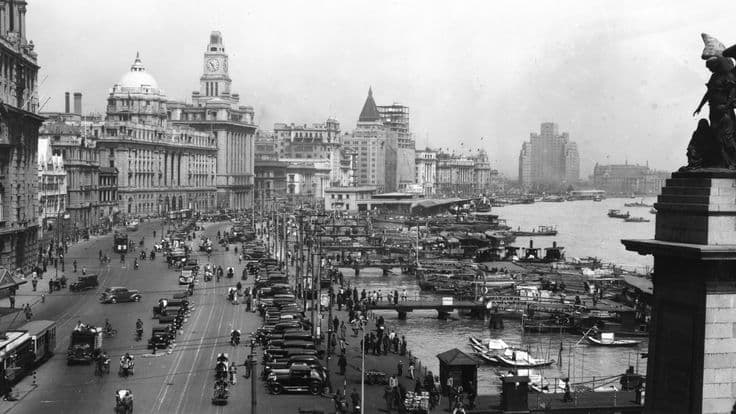
The British Settlement came first in 1843. British merchants quickly set up trading houses along the waterfront. This area became the famous Bund.
The French Concession followed in 1849. The French wanted their own space, separate from other foreigners. Their area developed a different character – more cafés, tree-lined streets, and relaxed vibes. ☕
The American Settlement started small. Later, in 1863, the British and American areas joined together. They called this the International Settlement. It was run by a council of foreign business leaders.
🗺️ Shanghai Foreign Concessions Map
Hover over areas to explore different zones!
👆 Hover over a zone on the map to see details
🎬 Shanghai: History of the Treaty Port Era - Documentary
Life in Treaty Port Shanghai
The International Settlement
The International Settlement was like a city within a city. It had its own police force, its own courts, and its own rules. The Shanghai Municipal Council ran everything.
Who sat on this council? Mostly British and American businessmen. They made decisions about roads, buildings, and laws. Chinese residents paid taxes but couldn't vote for years.
The settlement had wide streets designed for carriages and later cars. It had electric lights before many Western cities! Banks, hotels, and trading companies lined the waterfront. This was where the money was made.
The French Concession
Walk into the French Concession, and you entered a different world. The streets were narrower and lined with plane trees brought from France. 🌳
The French Concession attracted artists, writers, and revolutionaries. It felt more relaxed than the business-focused International Settlement. French bakeries and Russian restaurants added to the mix.
Interestingly, more Chinese people lived in the French Concession than French! By the early 1900s, Chinese residents far outnumbered Europeans. But French authorities still made all the rules.
Chinese Shanghai
Outside the foreign zones, old Shanghai continued its traditions. The Chinese City had crowded lanes, traditional markets, and ancient temples.
Many Chinese workers commuted into foreign areas for jobs. They worked as servants, factory workers, and shop assistants. Some Chinese entrepreneurs became very wealthy by learning foreign business methods.
But there was tension too. Signs in some parks supposedly said "No Dogs or Chinese Allowed." Whether this exact sign existed is debated. But the feeling of being second-class in your own country was very real.
👥 Shanghai Population Through the Treaty Port Era
Foreign communities: Japanese, British, American, Russian, Jewish refugees
Who Lived in Treaty Port Shanghai?
The Shanghailanders
Foreigners who settled permanently in Shanghai were called "Shanghailanders." They built comfortable lives that mixed home country customs with local luxury.
British Shanghailanders might wake up to tea served by Chinese servants. They'd head to their offices on the Bund, have lunch at their private clubs, and play tennis in the afternoon. Evening meant cocktails and dancing at fancy hotels.
American businessmen came seeking fortune. Some ran trading companies dealing in silk and tea. Others opened factories making textiles and other goods.
Many Shanghailanders never learned Chinese. They didn't need to – they could live entirely in English-speaking circles. But some did engage deeply with Chinese culture and built genuine friendships.
The Chinese Population
By the height of the treaty port period, Chinese people made up over 95% of Shanghai's population. Yet they held little political power in the foreign zones.
Wealthy Chinese merchants found ways to profit from the new system. They partnered with foreign firms or started their own modern businesses. Some sent their children to Western schools.
Workers faced harder lives. Factory conditions were often terrible. Hours were long, pay was low, and safety standards barely existed. Many came from the countryside seeking any opportunity.
Other Communities
Shanghai became incredibly diverse during this era. 🌍
Japanese residents formed a large community, especially after Japan gained its own concession rights. By the 1930s, tens of thousands of Japanese lived in Shanghai.
Jewish refugees found safety in Shanghai when other doors closed. During World War II, Shanghai was one of the few places that accepted Jewish people fleeing persecution. About 20,000 found shelter there.
Sephardic Jewish families like the Sassoons and Kadoories came earlier from Baghdad. They built huge business empires. The Sassoon family alone constructed many of Shanghai's most famous buildings, including what's now the Peace Hotel.
Russians fled to Shanghai after their revolution. White Russians (those opposing the communist takeover) brought their culture, food, and music to the city.
🎬 Walking The Bund Shanghai - Historic Treaty Port Architecture
Economy and Trade
What Made Shanghai Rich
The shanghai treaty port era transformed a fishing town into a global trading hub. How did this happen?
First came the silk trade. Chinese silk was prized around the world. Shanghai became the main export point. Massive warehouses stored bales of silk waiting for ships.
Tea followed a similar path. Foreign traders couldn't get enough of it. Shanghai's location made shipping tea easy and profitable.
And yes, opium remained part of the economy for decades. Despite being officially banned, the drug trade continued. It brought misery to many Chinese families but profits to traders.
Later, manufacturing took off. Cotton mills employed tens of thousands. By the 1930s, Shanghai produced much of China's industrial output. 🏭
Banking and finance grew from all this trade. HSBC (originally the Hongkong and Shanghai Banking Corporation) started here. So did many other banks that still exist today.
The Bund as Financial Center
The Bund was Shanghai's Wall Street. Standing on this waterfront strip, you'd see one impressive building after another.
Each building shouted power and permanence. The Customs House controlled all trade coming in and out. The HSBC Building was said to be the finest between the Suez Canal and the Mississippi River.
These weren't just offices. They were symbols. Foreign companies wanted everyone to see their success. They hired the best architects and used the finest materials.
Today, these same buildings still stand. They've been restored and house restaurants, hotels, and museums. Walking the Bund feels like stepping back into the treaty port period.
Architecture of the Treaty Port Era
Iconic Buildings That Still Stand
The best way to understand the shanghai treaty port era? Look up! 🏛️ The buildings tell the story.
The Customs House with its clock tower watches over the Bund. This is where all goods were taxed and inspected. The clock, called "Big Ching", was modeled after London's Big Ben.
The Peace Hotel (originally Sassoon House) defined Shanghai glamour. Built by Victor Sassoon, it hosted celebrities, movie stars, and royalty. Its green pyramid roof remains an icon.
The HSBC Building showed banking power. Its massive columns and bronze lions impressed everyone who walked past. Some called it the most beautiful building in Asia.
The Park Hotel was China's tallest building for decades. Its Art Deco design influenced architecture across the region.
Architectural Styles
The treaty port era produced an amazing mix of styles.
Neo-classical designs dominated the early years. Think Greek columns and grand domes – styles that reminded Europeans of home.
Art Deco swept through Shanghai in the 1920s and 30s. This modern style featured geometric shapes, bold lines, and decorative flourishes. Shanghai has one of the world's best collections of Art Deco buildings.
Chinese elements sometimes appeared too. Some architects blended Eastern and Western styles. You might see traditional Chinese roofs on otherwise Western buildings.
Walking through old Shanghai today is like visiting an outdoor museum. Each building tells a story of ambition, power, and cultural mixing.
🎬 Shanghai: Treaty Port History Walking Tour
Culture and Daily Life
Entertainment and Nightlife
Shanghai in its treaty port heyday was called the "Paris of the East." And for good reason! 🎷
Jazz clubs filled the city with music. African American musicians brought jazz to Shanghai. Local Chinese musicians learned and added their own twists. The result? A unique Shanghai sound that's being revived today.
Dance halls attracted thousands nightly. The famous Paramount Ballroom had a spring dance floor for extra bounce. Young people from all backgrounds mixed on these dance floors.
Cabarets and theaters offered shows ranging from Chinese opera to Hollywood films. Shanghai had more movie theaters than most cities in the world.
Not all entertainment was innocent, though. Gambling houses and less respectable establishments also thrived. Shanghai earned a reputation as a city of both glamour and vice.
Food and Cuisine
The meeting of cultures created amazing food! 🍜
Foreign residents missed their home cooking. So restaurants serving everything from British roast beef to Russian borscht opened up. The Palace Hotel became famous for its Western dining.
Chinese cuisine evolved too. Shanghai cooking absorbed influences from around China as migrants flooded in. The famous xiaolongbao (soup dumplings) became a city symbol.
Fusion food appeared naturally. Chinese cooks learned Western techniques. Western cooks discovered Chinese ingredients. The result was new dishes that belonged to neither tradition – and both.
Fashion and Society
The qipao (or cheongsam) dress perfectly represents this cultural mixing. Originally a loose traditional garment, it transformed during the treaty port era. Shanghai tailors made it fitted, elegant, and modern.
Women in Shanghai were among the most fashionable in Asia. They read foreign magazines and adapted the latest styles. Some mixed Western dresses with Chinese accessories.
Men's fashion shifted too. Business suits replaced traditional robes for many. But you'd still see every kind of dress on Shanghai streets – from silk gowns to peasant clothes.
The Dark Side of Treaty Port Shanghai
Inequality and Exploitation
Not everything about this era was glamorous. The shanghai treaty port system was built on unfairness.
Chinese workers faced terrible conditions. Factory workers, especially in silk mills, worked incredibly long hours. Child labor was common. Safety protections barely existed.
Wealth gaps were enormous. A foreign businessman might earn in a week what a Chinese worker earned in a year. This inequality bred resentment.
The "No Dogs or Chinese" sign has become legendary. Did it really exist? Historians debate this. Park rules did restrict Chinese access in certain ways. Whether that exact sign hung somewhere is uncertain. But the humiliation that Chinese people felt was absolutely real.
Political Tensions
Anger at foreign privilege fueled political movements.
The Chinese Communist Party was actually founded in Shanghai in 1921. Why there? Because the foreign concessions offered some protection from Chinese government crackdowns. Revolutionaries could hide more easily.
The May 30th Movement of 1925 exploded after police shot Chinese protesters. Strikes and boycotts followed. Chinese nationalism was growing stronger.
By the 1930s, the treaty port era was clearly ending. Chinese people increasingly demanded control of their own country. The special foreign privileges seemed more and more outdated.
End of the Treaty Port Era
Japanese Occupation
Everything changed when Japan invaded China in 1937. Japanese forces captured Chinese-controlled Shanghai quickly.
The foreign concessions stayed neutral at first. They became islands of safety in a war zone. Refugees flooded in.
But after Japan attacked Pearl Harbor, it also took over the International Settlement and French Concession. Foreign residents were imprisoned in camps. The old Shanghai was gone.
Return to Chinese Control
During World War II, the Western powers gave up their special rights. In 1943, the unequal treaties were finally cancelled. China regained control of Shanghai – at least on paper.
After the war, Shanghai returned briefly to something like its old self. But the treaty port system was finished.
When the Communist Party took power in 1949, everything changed again. Foreign businesses closed or were taken over. Most foreigners left. The glittering Shanghai of the treaty port era became a memory.
Legacy of the Shanghai Treaty Port Era
What Remains Today
Walk through Shanghai today, and the treaty port era is everywhere! 🌃
The Bund still impresses visitors. Those grand banking buildings now house luxury hotels, restaurants, and museums. Evening lights make them even more dramatic than before.
The French Concession neighborhood keeps its tree-lined charm. Coffee shops fill the old European buildings. Its one of the trendiest areas in modern Shanghai.
Pudong across the river tells a different story. This financial district with its futuristic towers didnt exist during the treaty port era. It shows how Shanghai has grown beyond its colonial past.
How to Experience Treaty Port History
Want to explore this history yourself? Here are some great options:
Museums tell the story well. The Shanghai History Museum in Peoples Square covers the entire period. The Bund Historical Museum focuses on the waterfront.
Walking tours bring history to life. Local guides can show you hidden corners of the French Concession and International Settlement area.
Historic hotels let you sleep in history. The Peace Hotel and Fairmont Peace Hotel still operate in their original buildings.
The Jewish Refugees Museum shares the remarkable story of how Shanghai saved lives during World War II.
Recommended Resources
Books to Read 📚
If this history fascinates you, dig deeper with these books:
- Shanghai: The Rise and Fall of a Decadent City by Stella Dong – A readable, entertaining overview
- Empire Made Me by Robert Bickers – One police officers story brings the era to life
- Life and Death in Shanghai by Nien Cheng – A personal account spanning the old and new Shanghai
- The Bund Shanghai by Peter Hibbard – Focuses on the famous waterfront
Museums and Sites to Visit
Planning a trip? Dont miss:
- Shanghai History Museum – Comprehensive overview
- The Bund – Self-guided walking tour
- French Concession walking tours – See preserved architecture
- Shanghai Jewish Refugees Museum – Moving memorial
- Ohel Rachel Synagogue – Historic worship site
- Shikumen Open House Museum – See how ordinary people lived
Conclusion: Your Next Steps ✅
The shanghai treaty port era shaped one of the worlds great cities. From the Opium Wars to the foreign concessions, from jazz clubs to revolutionary meetings – this period packed incredible change into about one hundred years.
Heres what to do next:
- 📖 Read one book from the recommended list to deepen your knowledge
- 🎥 Watch a documentary about Old Shanghai for visual understanding
- 🗺️ Plan a walking tour of the Bund and French Concession if you visit
- 🏛️ Visit the Shanghai History Museum for the complete story
- 📱 Use historical walking tour apps to explore with guidance
- 📸 Compare old photos with modern views to see whats changed
- 🎧 Listen to Shanghai jazz recordings from the era
- ✍️ Share what youve learned – this fascinating history deserves more attention!
The buildings still stand. The stories still echo. And now you know enough to appreciate what makes the shanghai treaty port era one of historys most fascinating chapters. Happy exploring! 🌟