
Shanghai Bund Waterfront: The Complete Visitor Guide
Discover Shanghai Bund Waterfront with expert tips, historical building guides, photography spots, and a step-by-step walking tour plan.
Posted by
 Vangelis
Related reading
Shanghai Gubei Area: 12 Things You Must Know in 2025
Discover Shanghai's Gubei Area — the top expat community guide covering food, living, transport, and hidden gems in this international neighborhood.
Hangzhou Day Trip: 12 Best Things to Do (2025 Guide)
Plan the perfect Hangzhou day trip with our complete guide. Explore West Lake, ancient temples, tea villages & more — just 45 min from Shanghai.
Anime in Shanghai: 15 Things Every Fan Needs to Know
From ChinaJoy to Bilibili World, the Animate flagship store to hidden otaku alleys — your complete guide to the shanghai anime scene, events, shops, culture, and tips for visiting fans.
Qibao Waterfront Day Trip: 12 Things to Do & See
Plan the perfect Qibao Waterfront day trip from Shanghai. Discover canal rides, street food, temples & hidden gems in this complete guide.
15 Things You Need to Know About Street Art in Shanghai
Discover the best street art in Shanghai — from M50 Creative Park to hidden Tianzifang alleys. Your complete guide to murals, graffiti, artists, and neighborhoods.
9 Best Zoos and Animal Attractions in Shanghai You Have to Visit
Planning a trip to Shanghai and wondering where to see amazing animals? From giant pandas at Shanghai Zoo to open safaris at Shanghai Wild Animal Park, this complete guide covers every top wildlife attraction in the city.
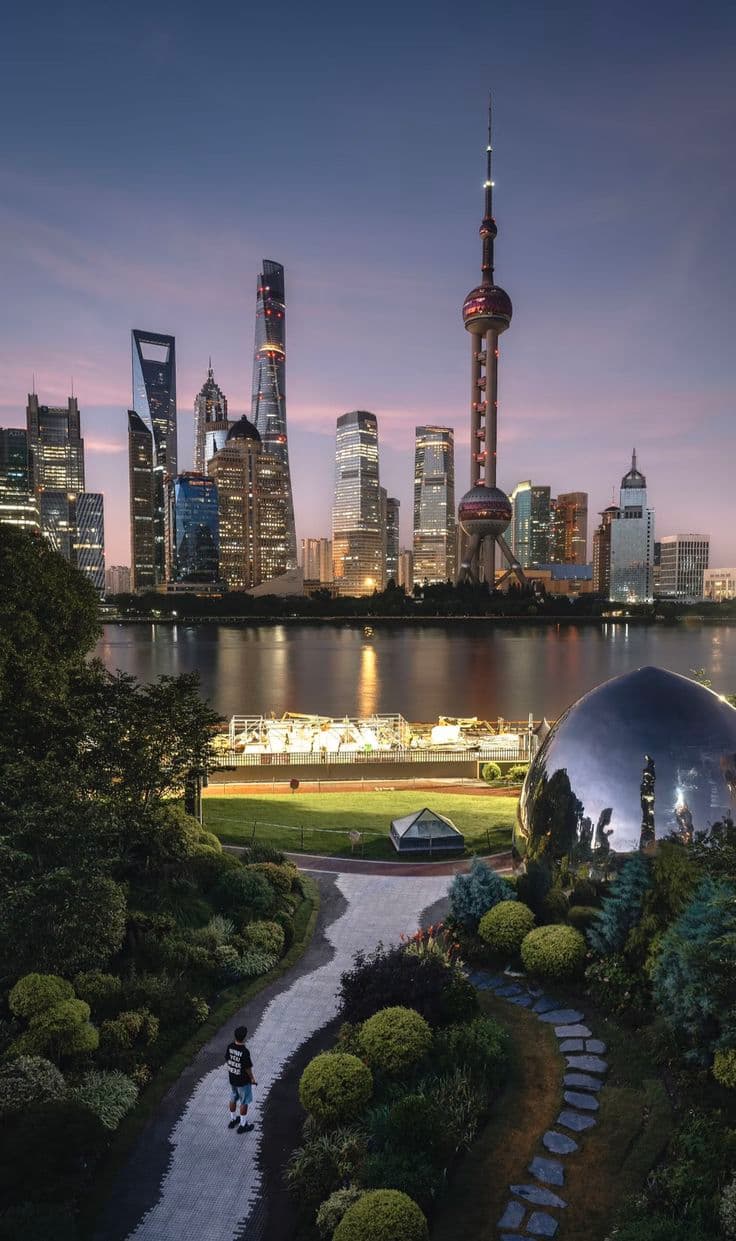
🌇 The Shanghai Bund Waterfront — Where History Meets the Skyline
Imagine standing on a riverside promenade as the last light of day melts behind you. Across the water, Pudong's glass towers ignite one by one — the Oriental Pearl Tower blushing pink, the Shanghai Tower catching fire at its crown, and the whole spectacle shimmering across the Huangpu River like a second city made of light. This is the Shanghai Bund Waterfront, and it stops people in their tracks every single time.
The Bund is not just a pretty backdrop for photos. It is one of Asia's most layered, most storied urban waterfronts — a 1.5-kilometre promenade where a century of global ambition is literally written in stone. Whether you are visiting for the first time or returning for the tenth, there is always something new to notice: a building detail you missed, a viewpoint you have not tried, a moment of light you have never caught.
This guide covers everything you need to know: the history behind those famous facades, the best times to visit, a step-by-step walking tour, and expert photography tips that will help you capture the Bund the way it deserves to be seen.
📋 Quick Facts: Shanghai Bund Waterfront
- Length: 1.5 km promenade
- Location: Huangpu District, Shanghai
- Best visiting hours: 6–9 AM and 7–10 PM
- Nearest Metro: East Nanjing Road Station (Lines 2 and 10)
- Admission: Free
- Address: Zhongshan East 1st Road, Huangpu District
🏛️ What Is the Shanghai Bund Waterfront? A Historical Overview
From Colonial Trading Port to Global Icon
The word "Bund" does not come from Chinese. It is an Anglo-Indian term meaning an embanked quayside or levee — and that etymology says a lot about where this place came from.
After the First Opium War ended in 1842, the Treaty of Nanking forced China to open five ports to foreign trade. Shanghai was one of them. By 1846, British merchants had established a settlement along the western bank of the Huangpu River, and they wasted no time building to impress. Trading houses, banks, consulates, and hotels rose in rapid succession over the following decades — each one trying to outdo the last in scale and architectural ambition.
By the early twentieth century, the Bund had become the financial capital of the Far East. More than thirty foreign banks operated within walking distance of each other here. The money was staggering, and the buildings showed it.
Then came 1949. When the People's Republic of China was established, foreign firms left and the buildings were repurposed by government institutions and state enterprises. The skyline was frozen in time — which, accidentally, preserved everything. The real transformation came ahead of the 2010 World Expo, when a major renovation project widened the promenade, buried traffic underground, and restored many of the heritage facades to something close to their original glory.
📅 Timeline at a Glance
- 1846 — British settlement established, first Bund buildings constructed
- 1920s–1930s — Peak construction era; Art Deco and Neoclassical landmarks completed
- 1949 — Foreign firms exit; buildings handed to Chinese institutions
- 1990s — Luxury hotel and retail redevelopment begins
- 2009–2010 — World Expo renovation; promenade rebuilt and underground road tunnel completed
The 26 Heritage Buildings — A Walk Through Architectural Styles
One of the things that makes a Shanghai Bund historical buildings guide so fascinating is the sheer range of styles packed into a single kilometre and a half. You will find Beaux-Arts grandeur sitting next to Gothic Revival details, Art Deco geometry stepping right up to Neoclassical columns. In most cities, this would look like chaos. Here, it somehow works.
Here are five buildings you absolutely must know before you arrive:
- 🏦 The Bund 12 — Former HSBC Building (Neoclassical): Completed in 1923, once considered the finest building between the Suez Canal and the Bering Strait. The interior dome ceiling is covered in original mosaics. Today it houses the Shanghai Pudong Development Bank — the lobby is accessible to the public. Walk in and look up.
- 🕐 The Bund 13 — Customs House (Neoclassical with Gothic tower): The clock tower is the Bund's most recognisable vertical element. When it strikes noon, the bell chime carries across the promenade. The building dates to 1927 and still functions as the Shanghai Customs House.
- ✨ The Bund 18 — Former Chartered Bank of India (Art Deco): After a meticulous renovation, Bund 18 now houses luxury boutiques and a rooftop terrace restaurant. The building strikes a balance between Neoclassical bones and Art Deco detailing that rewards a slow, careful look.
- 🏯 The Bund 23 — Bank of China Building (Chinese-Western Hybrid): Designed in the 1930s with input from Chinese architect Luke Him Sau, it fuses a Western steel-frame structure with Chinese roof details and decorative motifs. The green pyramid roof is the giveaway.
- 🎷 The Peace Hotel — Bund 20 (Jazz Age Art Deco): Originally the Cathay Hotel, built in 1929 by Victor Sassoon. The eight-sided lobby, stained glass, and dark wood panelling have survived intact. The jazz bar in the basement has been running nightly shows for decades.
🎥 Shanghai Bund Historical Buildings Explained — Street-Level Documentary Tour
🗓️ How to Plan Your Shanghai Bund Waterfront Visit
Best Time to Visit the Shanghai Bund
Timing makes an enormous difference at the Bund. Get it right and you will have the promenade nearly to yourself with perfect light. Get it wrong and you will be shuffling through crowds under flat, grey midday haze.
By Time of Day:
- 🌅 Early morning (6–8 AM): The secret weapon of experienced visitors. Crowds are thin, the light is soft and golden, and elderly locals practise tai chi along the promenade. This is the best window for photography without strangers in every frame.
- ☀️ Midday (11 AM–2 PM): Least recommended. Foot traffic peaks, light is harsh and flat, and haze can wash out the Pudong skyline completely.
- 🌇 Golden hour (5–7 PM): The sweet spot for photography. The sun drops behind you as you face east, the Pudong towers catch warm light, and the atmosphere shifts from tourist circuit to evening destination.
- 🌃 Night (7–10 PM): When the Bund truly turns on. The Pudong light show runs nightly. For Shanghai Bund at night photography, this is the unmissable window.
Best Visit Time at a Glance:
| Season | Conditions | Best For |
|---|---|---|
| Spring (Mar–May) | Mild, occasional fog | Moody atmospheric shots |
| Summer (Jun–Aug) | Hot, humid, typhoon risk | Avoid if possible |
| Autumn (Sept–Nov) | Clear skies, comfortable | Best overall visit ✅ |
| Winter (Dec–Feb) | Cold, low crowds | Festive lighting, quiet walks |
Getting to the Shanghai Bund
The easiest option is the Metro. Lines 2 and 10 both stop at East Nanjing Road Station — take Exit 1 and you are a five-minute walk from the northern end of the promenade.
For a more memorable arrival, consider the Huangpu River Ferry. The crossing from Pudong to Puxi costs just ¥2 and takes about five minutes, but the approach from the water — the whole Bund facade opening up across the river — is genuinely cinematic.
- 🚇 Metro: Lines 2 and 10, East Nanjing Road Station, Exit 1
- ⛴️ Ferry: Puxi–Pudong crossing for scenic water approach (¥2)
- 🚕 Taxi/DiDi: Drop-off at Zhongshan East 1st Road
- 🚶 Walking: 15 minutes from Yu Garden, 10 minutes from Nanjing Road Pedestrian Street
- 🚫 Driving: Strongly discouraged — no meaningful visitor parking
How Long Should You Spend at the Bund?
- Minimum (1.5 hours): Walk the promenade, take photos, soak up the skyline view
- Recommended (3–4 hours): Explore the promenade, step into accessible building lobbies, have a riverside meal
- Full experience (half-day): Add a Huangpu River cruise, rooftop bar visit, and Old Town walk
🕐 Sample 3-Hour Morning Itinerary
| Time | Activity |
|---|---|
| 7:00 AM | Arrive at Waibaidu Bridge (northern end) |
| 7:30 AM | Walk south along the promenade, photograph buildings |
| 8:30 AM | Coffee break at a riverside café |
| 9:00 AM | Explore public lobbies — Bund 12 mosaic dome, Peace Hotel bar |
| 10:00 AM | Exit toward East Nanjing Road or Yu Garden |
🚶 The Shanghai Bund Walking Tour — Step-by-Step Route
The best Bund Shanghai walking tour runs north to south, starting at Waibaidu Bridge and ending near the Meteorological Signal Tower. This direction puts the heritage buildings on your left and the river views on your right throughout the walk — the ideal setup for taking in both simultaneously.
Starting Point — Waibaidu Bridge (Garden Bridge)
Built in 1907, Waibaidu Bridge was the first all-steel bridge ever constructed in China. It spans the mouth of Suzhou Creek where it meets the Huangpu River, and it still carries pedestrian and vehicle traffic today. Stand at the centre of the bridge and look south — the Bund promenade stretches out ahead of you. The bridge railings make excellent leading lines in photographs; use them to draw the eye toward the distant Pudong skyline.
Key Stops Along the 1.5 km Promenade
- Huangpu Park and Monument to the People's Heroes (0 km) — Just south of Waibaidu Bridge. A useful landmark and good orientation point, with one of the cleaner sightlines toward Pudong. Time: 10 minutes.
- Bund 3, Union Building (0.2 km) — This 1916 neo-Renaissance building now houses luxury retail and a rooftop bar. The facade is worth a careful look — particularly the rusticated base and arched window surrounds. Time: 5 minutes.
- Bund 12, Former HSBC Building (0.5 km) — Do not walk past without going inside. The entrance lobby contains an octagonal mosaic ceiling covered over during the Cultural Revolution and only rediscovered in the 1990s. It is one of the genuinely surprising free moments on the Bund. Time: 15 minutes.
- Bund 13, Customs House (0.55 km) — Right next door to Bund 12. If you time your arrival for noon, the clock tower bell chime is worth waiting for. Time: 10 minutes.
- The Peace Hotel, Bund 20 (0.8 km) — Step inside. The lobby is one of the best-preserved Art Deco interiors in Asia. The ground-floor bar serves coffee and cocktails all day; the downstairs jazz bar runs evening performances most nights. Time: 20–30 minutes.
- Bund 18 (0.85 km) — Luxury boutiques at street level and a rooftop terrace restaurant above. The carved stone details on the facade reward close inspection. Time: 15 minutes.
- Chenyi Square (1.0 km) — The bronze statue of Mayor Chen Yi stands at the centre of a small plaza that functions as the emotional heart of the promenade. This is also the most photographed angle for the Pudong skyline — every professional Bund photograph you have seen was probably taken from near here. Time: 15 minutes.
- Meteorological Signal Tower (1.5 km) — The southern anchor of the promenade, this 1884 tower originally served as a weather and time-signal station for ships on the Huangpu. It marks the end of the heritage Bund strip. Time: 10 minutes.
Crossing to Pudong — Extending Your Walk
Once you have covered the western bank, crossing to Pudong adds a completely different dimension — you are now looking back at the Bund from the opposite shore, and the view is extraordinary.
- ⛴️ Huangpu River Ferry (¥2): Cheapest and most scenic. Ferries run frequently from near Chenyi Square. The five-minute crossing gives you moving water-level shots of both shorelines. Strongly recommended for first-time visitors.
- 🚇 Bund Sightseeing Tunnel (¥55 round trip): A uniquely bizarre Shanghai experience — a slow capsule ride through a colourful LED tunnel under the river. More theme park than transport, but worth doing once.
- 🚶 Yan'an East Road Tunnel (free, 20-minute walk): Functional underground walkway connecting Puxi and Pudong. Not scenic, but free.
🎥 Complete Shanghai Bund Walking Tour — North to South in Real Time (7 AM vs 7 PM)
📸 Shanghai Bund Photography Guide — Viewpoints and Techniques
The Bund is one of the most photographed urban scenes in the world, which means it is both an incredible subject and a genuine challenge. Standing where ten thousand other photographers have stood and shooting the same shot they all shot is easy. Making something distinctive requires knowing the less-obvious angles, the right timing, and a few technical tricks.
Best Photography Viewpoints
- 📍 From the Bund promenade (classic west-bank angle): The standard — and still the best — view of the Pudong skyline. Optimal focal length is 24–70mm. Position yourself at Chenyi Square for the widest, most balanced composition. Use the river railing as a foreground element.
- 📍 Waibaidu Bridge midpoint: Look south down the promenade. The bridge railings create strong leading lines. Best at early morning when mist hangs over Suzhou Creek.
- 📍 From the Pudong side (reverse angle): Cross via ferry and shoot back at the Bund facades from the eastern bank. This angle is dramatically underused. The whole row of buildings appears as a solid, unified wall of history against the sky.
- 📍 Bund 18 rooftop terrace: An elevated angle directly above street level looking north and south along the heritage strip. Requires a dining reservation but worth planning for.
- 📍 Inside the HSBC lobby dome (Bund 12): Look straight up. The mosaic octagon is one of the great interior photography subjects in Shanghai — all the more remarkable because it is completely free.
Technical Tips for Shanghai Bund at Night Photography
- 🔭 Use a tripod: Long exposures (2–8 seconds) smooth out the river surface and turn boat trails into light streaks. Essential for night shooting.
- 📐 Shoot in RAW: The dynamic range between the dark river and the bright illuminated buildings is extreme. RAW files give you far more recovery latitude in post-processing.
- 🎯 Time the light show: Pudong's coordinated building light display runs at set times — typically on the hour. Arrive 10 minutes early to secure your spot on the railing before crowds surge.
- 🌫️ Use fog creatively: Spring fog mornings diffuse the Pudong lights into soft halos. This looks spectacular and is completely different from the crisp autumn shots everyone else posts.
- 📱 Phone photography: Modern smartphones handle the Bund surprisingly well at golden hour. Switch to Night Mode after 7 PM and use a small portable tripod or rest the phone on the railing.
📷 Photography Settings Cheat Sheet
| Condition | Aperture | Shutter Speed | ISO |
|---|---|---|---|
| Early morning | f/8 | 1/250s | 100–200 |
| Golden hour | f/8–f/11 | 1/125s | 100 |
| Night (tripod) | f/11 | 4–8s | 100–400 |
| Night (handheld) | f/2.8 | 1/60s | 1600–3200 |
🎥 Shanghai Bund Night Photography Guide — Best Spots, Timing and Camera Settings
💡 Insider Tips for the Shanghai Bund Waterfront
These are the things that regular visitors learn through multiple trips — now you know them before your first:
- Arrive at 6 AM on a weekday ⏰ — The promenade is almost deserted. You will have the building facades and skyline completely to yourself. The light is extraordinary and the atmosphere is peaceful beyond belief.
- Enter every open lobby 🏛️ — The Bund 12 mosaic dome, the Peace Hotel bar, the Three on the Bund atrium. Many of these interiors are free and spectacular. Most visitors walk straight past them.
- Wear comfortable shoes 👟 — The promenade is 1.5 km plus all your detours. Add exploring the surrounding streets and you can easily cover 6–8 km in a full visit.
- Download offline maps 📱 — The Bund area is surrounded by confusing one-way streets. Google Maps offline works well; Amap (Gaode) is better for local routing in Chinese.
- Use DiDi for late-night departure 🚕 — After the evening light show, taxis near the Bund charge surge prices and are hard to flag. Open DiDi (China's Uber) before you leave and book from a side street one block back.
- Combine with nearby attractions 🗺️ — Yu Garden is a 15-minute walk south. Nanjing Road Pedestrian Street is 10 minutes north. The Rockbund Art Museum is directly adjacent. Plan a full day in this neighbourhood rather than just the promenade.
🗺️ What to Do Near the Shanghai Bund Waterfront
The Bund sits at the centre of one of Shanghai's richest neighbourhoods for sightseeing. Here is what is within easy reach:
Within 15 Minutes Walking
- 🏯 Yu Garden (Yuyuan Garden): A classical Ming Dynasty garden tucked behind the Old City. The surrounding bazaar is touristy but the garden itself is genuinely beautiful. Entry ¥40.
- 🛍️ Nanjing Road Pedestrian Street: Shanghai's main shopping boulevard stretches west from the Bund. Fine for window shopping and people-watching, though most retail is chain stores.
- 🎨 Rockbund Art Museum: Located directly on the Bund in a beautiful 1932 building. Rotating contemporary art exhibitions in one of the Bund's finest restored interiors. Entry ¥60.
- ☕ Three on the Bund: A restored heritage building housing restaurants, galleries, and bars. The Evian Spa on the upper floors and Laris restaurant offer different ways to spend time in a genuine Bund heritage space.
Across the River in Pudong (15–20 Minutes)
- 🗼 Oriental Pearl Tower: The iconic pink-and-silver tower has a glass-floor observation deck and revolving restaurant. Best visited for the experience rather than the view — the Bund-side angle is superior for photography.
- 🏙️ Shanghai Tower Observation Deck (floor 118): The highest observation deck in China at 546 metres. On a clear autumn day, the Bund from above is extraordinary. Entry ¥180.
- 🏦 IFC Mall and Lujiazui Financial District: The commercial heart of modern Shanghai. Walk the streets to feel the contrast between old Bund and new Pudong.
❓ Frequently Asked Questions
Is the Shanghai Bund Waterfront free to visit?
Yes, completely. Walking the promenade, viewing the buildings from outside, and accessing certain public lobbies (like Bund 12) costs nothing. Individual attractions — restaurants, bars, museums, observation decks — charge their own fees.
How long does the Bund walking tour take?
The 1.5 km promenade can be walked in 30 minutes at a brisk pace, but a proper north-to-south Bund Shanghai walking tour with stops at key buildings takes 2–3 hours. Add lobby visits and a coffee stop and you are at 3–4 hours comfortably.
What is the best Shanghai Bund viewpoint?
For the classic Pudong skyline shot, Chenyi Square (opposite the Peace Hotel) is the optimal Shanghai Bund viewpoint. For the reverse angle looking back at the Bund facades, cross to the Pudong bank via ferry — this perspective is underrated and less photographed.
Can I visit the inside of the Bund buildings?
Several buildings are accessible to the public: Bund 12 (HSBC Building) lobby has the famous mosaic ceiling, the Peace Hotel ground floor bar is open all day, and Bund 18 has retail at street level. Others are private offices or require dining reservations for upper floors. Always check current access before visiting.
Is the Bund safe at night?
Yes — the Bund promenade is well-lit, heavily policed, and genuinely safe at night. It is one of the most popular evening destinations in Shanghai. The main practical challenge at night is managing the crowds and finding transport when you are ready to leave.
What is the best season for a Bund visit?
Autumn (September to November) is the clear answer for the best time to visit Shanghai Bund. Clear skies, comfortable temperatures between 15°C and 22°C, and low humidity combine to create the best conditions for both visiting and photography. Spring is second-best; summer should be avoided if possible.
🌇 Key Takeaways: Your Shanghai Bund Waterfront Visit
The Shanghai Bund Waterfront rewards those who approach it with curiosity rather than simply following the tourist flow. Here is everything you need to carry away from this guide:
- ✅ Arrive early: 6–8 AM on a weekday gives you the promenade to yourself with the best light
- ✅ Go inside: The Bund 12 mosaic dome and Peace Hotel lobby are free and extraordinary
- ✅ Walk north to south: This direction keeps buildings on your left and river on your right throughout
- ✅ Cross to Pudong: The ¥2 ferry ride unlocks a completely different — and often more dramatic — perspective
- ✅ Best season: Autumn (October–November) for clear skies and comfortable walking temperatures
- ✅ Night photography: Bring a tripod, shoot RAW, and time the Pudong light show for maximum impact
- ✅ Allow 3–4 hours: The minimum to do the promenade, key lobbies, and a riverside coffee justice
- ✅ Combine with Yu Garden: A 15-minute walk south connects two of Shanghai's most iconic heritage sites in a single day
The Bund is one of those rare places that genuinely lives up to its reputation — and then exceeds it. The scale, the history, the architectural ambition, the improbable juxtaposition with Pudong's futuristic skyline across the water: it is simply unlike anywhere else on earth. Go early, go curious, and take your time.
Have you visited the Shanghai Bund Waterfront? Which building or time of day surprised you most? Share your experience — every visit reveals something different. 🏛️