
15 Things You Need to Know About Street Art in Shanghai
Discover the best street art in Shanghai — from M50 Creative Park to hidden Tianzifang alleys. Your complete guide to murals, graffiti, artists, and neighborhoods.
Posted by
 Vangelis
Related reading
Shanghai Gubei Area: 12 Things You Must Know in 2025
Discover Shanghai's Gubei Area — the top expat community guide covering food, living, transport, and hidden gems in this international neighborhood.
Hangzhou Day Trip: 12 Best Things to Do (2025 Guide)
Plan the perfect Hangzhou day trip with our complete guide. Explore West Lake, ancient temples, tea villages & more — just 45 min from Shanghai.
Anime in Shanghai: 15 Things Every Fan Needs to Know
From ChinaJoy to Bilibili World, the Animate flagship store to hidden otaku alleys — your complete guide to the shanghai anime scene, events, shops, culture, and tips for visiting fans.
Shanghai Bund Waterfront: The Complete Visitor Guide
Discover Shanghai Bund Waterfront with expert tips, historical building guides, photography spots, and a step-by-step walking tour plan.
Qibao Waterfront Day Trip: 12 Things to Do & See
Plan the perfect Qibao Waterfront day trip from Shanghai. Discover canal rides, street food, temples & hidden gems in this complete guide.
9 Best Zoos and Animal Attractions in Shanghai You Have to Visit
Planning a trip to Shanghai and wondering where to see amazing animals? From giant pandas at Shanghai Zoo to open safaris at Shanghai Wild Animal Park, this complete guide covers every top wildlife attraction in the city.
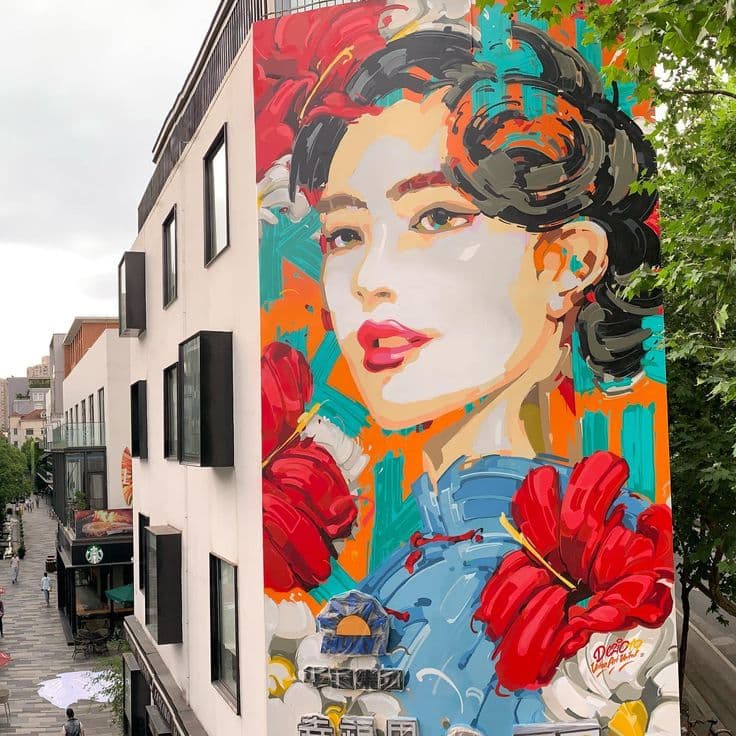
Shanghai Is a Canvas You Have to See
If you think street art only belongs in Berlin, New York, or Melbourne — Shanghai is about to change your mind. 🎨 The city is home to one of Asia's most exciting and fast-changing street-art scenes. Massive murals cover old factory walls. Tiny alleyways hide hand-painted gems. And every neighborhood tells a different visual story.
Whether you are a traveler hunting for the best photo spots, an art lover curious about the local scene, or just someone who wants to walk the city with new eyes — this guide is for you. Here are 15 things you need to know about street art in Shanghai, from the most famous districts to the hidden walls you almost certainly would walk past.
1. 🏗️ Shanghai Has a Surprisingly Deep Street Art History
Most people think street art in Shanghai is a recent thing. It is not. The roots go back to the late 1980s and 1990s, when Chinese cities were changing fast. As old factories closed and neighborhoods were torn down and rebuilt, young artists started using those blank walls as their canvas.
The early graffiti scene was raw and underground. Tags and throw-ups appeared on construction hoardings, bridges, and abandoned buildings. It was not always welcomed. But it was unstoppable. Over time, the city began to see art on walls as something more than a problem — and started to support it, especially in dedicated creative zones.
By the 2000s, commissioned murals and large-scale wall paintings became part of how Shanghai promoted its creative identity to the world. Today, the history of urban art in this city layers graffiti, propaganda, commercial muralism, and fine-art street work all on the same walls.
▶ Shanghai Street Art Scene — M50 Creative Park Walking Tour
2. 🏭 M50 Creative Park Is the Heartbeat of the Scene
If you visit only one place for street art in Shanghai, make it M50 (also written as M50 Creative Park). Located at 50 Moganshan Road in Putuo District, this place has a story as interesting as the art on its walls.
The buildings were originally part of a textile mill complex built in the early 20th century. When the factories shut down, artists started moving in — attracted by the cheap rent and the raw industrial atmosphere. Today, the park hosts over 100 galleries, studios, and creative businesses. But what makes it special for street art lovers is what happens on the outside walls.
Walk around the outside perimeter and you will find enormous murals painted by both local and international artists. Some have been there for years. Others appear overnight and change the entire feel of a wall. The art here ranges from abstract geometric pieces to photorealistic portraits to wild graffiti-style lettering.
- Address: 50 Moganshan Road, Putuo District
- Best time to visit: Weekday mornings for fewer crowds
- Free entry to the outdoor areas and most galleries
- Some galleries require a reservation — check ahead online
🗺️ Shanghai Street Art District Map
Click any district to learn more
100+ galleries in a former textile mill. The most famous street-art hub in Shanghai.
A maze of lane-house alleys packed with colorful murals, indie shops, and hidden art.
Colonial streets meet bold modern murals. Walk Wukang Road and Fuxing Road.
Shanghai's rising art corridor with massive installation art and curated murals.
Underrated wall art tucked into residential blocks. Less tourists, more authenticity.
Old shikumen buildings serving as canvases for emerging local graffiti writers.
3. 🌀 Tianzifang Is a Maze of Hidden Murals
Tianzifang is one of Shanghai's most beloved neighborhoods, and for good reason. Built inside a cluster of shikumen (石库门) lane-houses dating back to the 1930s, it is a labyrinth of narrow alleys, boutique shops, and — if you look closely — some seriously beautiful street art.
The art here is smaller and more intimate than the big murals at M50. Think hand-painted tiles, small stencil pieces tucked into doorways, illustrated shop signs, and tiny mosaic panels built into old brick walls. It rewards slow exploration. The best murals are often around corners you almost did not take.
What makes Tianzifang unique is how the street art feels like part of the neighborhood, rather than something painted on top of it. Many of the walls have been painted collaboratively by residents, local artists, and traveling muralists. It gives the area a layered, lived-in quality that you simply cannot fake.
4. 🌿 The French Concession Walls Tell a Different Story
Few neighborhoods in Shanghai have the visual drama of the French Concession. Wide, tree-lined streets. Crumbling Art Deco facades. Elegant shikumen buildings painted in faded pastels. And against all of that — bold, modern street art that creates a kind of visual conversation between the past and the present.
Walk down Wukang Road, Fuxing Road, or the back lanes near Xintiandi and you will find murals that lean into this contrast deliberately. Many pieces reference Shanghai's colonial history directly — mixing old architectural motifs with contemporary graphic styles to comment on identity, memory, and change.
This is the neighborhood where street art gets political and philosophical — carefully so, but clearly intentionally. The best pieces here feel like they are in conversation with the buildings they are painted on, not just decorating them.
5. 🚧 Moganshan Road Has Its Own Graffiti Rules
Not all street art in Shanghai is officially approved. But Moganshan Road (the stretch around M50) occupies a fascinating grey zone. The walls outside the park have historically been a battleground between graffiti writers who paint unauthorized pieces at night and authorities who whitewash them in the morning.
The result is a constantly changing, layered wall surface. Paint over paint over paint. You can actually see the history of the wall if you look at the edges — layers of color and line that tell the story of dozens of artists who worked there over the years. It is, in a strange way, the most honest form of street art you will find in the city.
Some sections are now semi-officially designated for murals with property owner permission. Others are not. Artists who want their work to last try to get permission. Those who just want to say something paint anyway and accept that it may be gone by morning. This tension is part of what keeps the scene alive.
▶ Graffiti & Urban Art in China — Culture and Underground Scene
6. 🖌️ Chinese Street Artists You Should Know
The global street art world knows a handful of Chinese artists whose work has gone far beyond Shanghai's walls. Here are the most important names to know:
- DALeast (Da Least) — Originally from Wuhan but a major figure in Shanghai's art community, DALeast is known for his stunningly detailed fragmented linework. His murals often depict wild animals or human figures dissolving into thousands of sharp, overlapping lines. His work has appeared on walls across the world.
- Hua Tunan (Chen Yingjie) — One of the most technically impressive artists working today, Hua Tunan fuses traditional Chinese ink painting with explosive street-art energy. His pieces look like ink splatter brought to life. His murals in Shanghai often draw large crowds of admirers.
- Guo Hongwei — Takes a more conceptual approach, blending hyperrealist painting with traditional folk motifs. His work explores Chinese cultural memory in a way that feels both deeply local and globally resonant.
- Sace — One of Shanghai's most prolific graffiti writers, known for clean, expressive lettering that appears all over the city. Less gallery, more pure street — and exactly the kind of artist who keeps the underground scene honest.
🎨 Key Artists Who Shaped Shanghai Street Art
Influence score based on visibility, critical recognition & cultural impact
7. 🌍 International Artists Have Left Their Mark on Shanghai
Shanghai has not just grown its own street art talent — it has also attracted some of the biggest names in global urban art. The city's openness to international culture, combined with its booming art market and high-profile creative festivals, has made it a destination for muralists from around the world.
- Shepard Fairey (OBEY) — The American artist behind the iconic Obama "Hope" poster has created work in Shanghai that mixes his trademark propaganda-pop aesthetic with Chinese visual references. His pieces in the city sparked real conversation about art, politics, and cross-cultural dialogue.
- Invader — The mysterious French artist known for installing ceramic pixel-mosaic tiles on buildings worldwide has left several of his signature pieces embedded in Shanghai's urban fabric. Finding them is a game in itself — the artist maintains a free mobile app to help hunters track them down.
- JR — The French photographer and street artist known for his massive black-and-white photo-paste murals has worked in Shanghai, pasting giant portrait photographs onto building facades in ways that make you rethink who the city belongs to.
8. 🆚 Street Art vs. Graffiti: There Is a Real Difference in Shanghai
These two terms are often used interchangeably, but in Shanghai — and in Chinese art culture broadly — the distinction matters a lot. Understanding the difference helps you appreciate what you are looking at, and why some art gets supported while other work gets painted over.
Street art in Shanghai typically refers to work that is commissioned, sanctioned, or at least tolerated by building owners or the local government. Large-scale murals on official buildings, art district walls, and urban beautification projects all fall into this category. This work is celebrated, protected, and often featured in tourism materials.
Graffiti, on the other hand, is unauthorized. It happens at night, on walls that were not agreed to, by writers who often stay anonymous. The Chinese government's attitude toward unauthorized graffiti has historically been strict — fast removal, occasional fines, and no tolerance in sensitive areas. Yet despite this, a graffiti subculture thrives, especially among young artists who see the unauthorized act itself as part of the message.
The tension between these two worlds is actually what makes the scene interesting. Without the energy and risk of graffiti culture, street art risks becoming just another form of corporate decoration.
9. 🖼️ The West Bund Art District Is a Rising Star
For years, M50 was the undisputed home of Shanghai's art scene. But in recent years, a new corridor has been rising along the West Bund of the Huangpu River — and it is reshaping where serious art happens in the city.
The West Bund district is home to world-class museums (including Yuz Museum and the Long Museum), a converted power station, and a growing collection of large-scale outdoor installations and murals. The public art here tends to be more curated and institutional than what you find on Moganshan Road — think ambitious, permanent commissions rather than spontaneous pieces.
But it is growing fast. More walls are being opened to muralists. More festivals are being held here. And the combination of waterfront setting, industrial architecture, and serious investment in culture makes it one of the most exciting places to watch for new street art in the city.
- Walk the West Bund Art Walk (a 11km riverside path) to see both indoor and outdoor art
- The area is most active during the annual West Bund Art & Design Fair
- Look for the large painted pylons and bridge structures along the riverbank
▶ Art District, Streets and Outdoor Installations
10. 🔥 Jing'an District Has Underrated Wall Art
Ask any local where to find street art and they will probably say M50 or Tianzifang. But the Jing'an District — home to some of Shanghai's most upscale real estate and the famous Jing'an Temple — has a surprisingly rich collection of wall art that most tourists completely miss.
The back streets around Anfu Road, Changshu Road, and the lanes behind Jing'an Temple are worth a slow, exploratory walk. You will find smaller murals painted on the sides of apartment buildings, illustrated hoardings around construction sites, and the occasional massive commissioned piece on a business facade.
Because Jing'an is not marketed as an art district, the work here has a more organic, spontaneous quality. It feels less curated and more real. If you want to see what street art looks like when it is still part of everyday neighborhood life rather than a tourist attraction, come here.
11. 🎉 Street Art Festivals and Events Bring Fresh Work Year-Round
One of the best things about Shanghai's street art scene is that it is never static. New work appears constantly, and the city hosts a number of events and festivals that bring fresh murals, live painting, and public engagement to walls across the city.
- West Bund Art & Design Fair — Held annually in autumn, this major fair draws international galleries, collectors, and artists. The outdoor program includes live mural painting and new large-scale commissions each year.
- Art021 Shanghai Contemporary Art Fair — A sister event that runs at the same time, with a strong outdoor component and pop-up installations that sometimes push into public space.
- Community pop-up painting events — Smaller, less publicized events happen throughout the year in neighborhoods like Hongkou and Yangpu. Follow local art social media accounts to catch these.
- M50 open studio weekends — Several times per year, the galleries at M50 open their doors for extended hours and sometimes host live painting demonstrations on the outdoor walls.
12. 📸 How to Photograph Street Art in Shanghai Like a Pro
Shanghai's street art is some of the most photogenic urban art in Asia. But getting a great shot takes more than just pointing your phone at a wall. Have you ever wondered why some street art photos look alive while others fall flat? Here are the key tips:
- Go early morning — The golden hour light (just after sunrise) makes colors richer and removes the harsh shadows that midday sun creates. Early morning also means fewer people in your shot, especially at busy spots like M50.
- Use a wide-angle lens or setting — Many Shanghai murals are huge. You need to step back and get wide to capture the full composition. A wide-angle lens (or your phone's 0.5x ultra-wide mode) helps enormously.
- Look for interaction between art and environment — The best street art shots often include something that shows the art in its real context: a person walking past, a plant growing over a corner of the mural, or the contrast between the art and the building next to it.
- Check the art at night — Some murals in areas like West Bund and Xintiandi are lit from below or with colored lights at night, creating a completely different mood. Worth a second visit after dark.
- Ask before including people in your shots — Especially in residential areas like Tianzifang. It is common courtesy, and most people are happy to pose if you ask with a smile.
13. 🚶 Street Art Tours: The Best Way to See It All
Shanghai is a huge city. Without a guide or a plan, it is easy to walk for hours and miss the best pieces. Fortunately, there are excellent ways to structure your street art exploration — whether you prefer going solo or with a group.
- Guided walking tours — Several local tour companies offer dedicated street art and graffiti tours of M50, Tianzifang, and the French Concession. Look for tours run by local artists, who can give you inside knowledge about specific pieces and the stories behind them.
- Self-guided routes — Plan a route using Google Maps (use a VPN in China) or Amap (the Chinese equivalent). Mark key spots in advance so you do not waste time backtracking.
- Bike tours — Renting a shared bike via Meituan or Hellobike and cycling between neighborhoods is one of the best ways to cover more ground. The flat terrain of central Shanghai makes it easy and enjoyable.
- Art district combo days — Combine M50 in the morning with Tianzifang in the afternoon, then finish with a walk along the West Bund at sunset. This gives you three very different flavors of Shanghai street art in one day.
14. 🛍️ How to Buy and Support Shanghai Street Artists
Seeing the art is one thing. Supporting the people who make it is another — and it matters more than you might think. Many of Shanghai's street artists work at the intersection of gallery art, commercial design, and street work. There are real ways to support them.
- Buy prints and originals at M50 galleries — Many of the galleries at M50 represent working street artists and sell affordable prints alongside larger original works. A print is a great way to take a piece of the scene home with you.
- Visit art markets — Shanghai has a growing number of independent art markets, including pop-up events at Jing'an Park and the flea markets at Tianzifang. Artists sell zines, stickers, tote bags, and small originals at accessible prices.
- Follow and share on social media — Many Shanghai-based street artists maintain active Instagram or Weibo accounts (note: Instagram requires a VPN in China). Following, sharing, and tagging their work helps spread their reach globally.
- Book studio visits — Some artists at M50 and the West Bund area welcome visitors for informal studio tours. This is a great way to learn about their process and often purchase directly from the source.
- Taobao and online platforms — Several Shanghai artists sell their work through Taobao and the platform XiaoHongShu (Little Red Book). Search for artist names directly to find their online shops.
15. 🔮 The Future of Street Art in Shanghai Is Bright — and Complicated
Where is Shanghai's street art scene heading? That is the question every artist, gallery owner, and urban culture enthusiast in the city is asking. And the honest answer is: it is exciting, but not without challenges.
On one hand, the city is investing more than ever in public art. New districts are being developed with dedicated mural spaces built in from the start. International festivals are growing. And a new generation of Chinese artists — trained at top art schools but influenced by global street culture — is producing work of remarkable quality and ambition.
On the other hand, urban development is a constant threat. Neighborhoods get demolished. Old walls get torn down. M50 itself has faced repeated rumors of redevelopment. When a district gets gentrified, the raw, experimental energy that made it a destination for street art often disappears with the affordable rents.
The artists who are keeping the scene most alive are the ones who are not waiting for permission — who treat the whole city as their canvas, who move fast, and who document everything online so that even temporary work becomes permanent in a digital sense. That restless energy is what makes street art in Shanghai worth following, year after year.
Top Takeaways 🎯
Shanghai's street art scene is one of the most vibrant and fast-changing in all of Asia. Here is what to remember:
- 🏭 M50 Creative Park on Moganshan Road is the must-visit starting point for any street art tour
- 🌀 Tianzifang rewards slow exploration — the best pieces are hidden in the lanes
- 🌿 The French Concession offers stunning contrast between colonial architecture and bold modern murals
- 🖼️ The West Bund is the city's rising art corridor — watch this space closely
- 🔥 Do not overlook Jing'an and Hongkou for authentic, tourist-free street art experiences
- 🎨 Support local artists by buying prints, following their social media, and visiting galleries
- 📸 Visit early morning for the best light and the fewest crowds
- 🔮 The scene is evolving fast — new murals and new neighborhoods are emerging all the time
Ready to explore? Lace up your shoes, charge your camera, and head out. The walls of Shanghai are waiting. 🎨🏙️